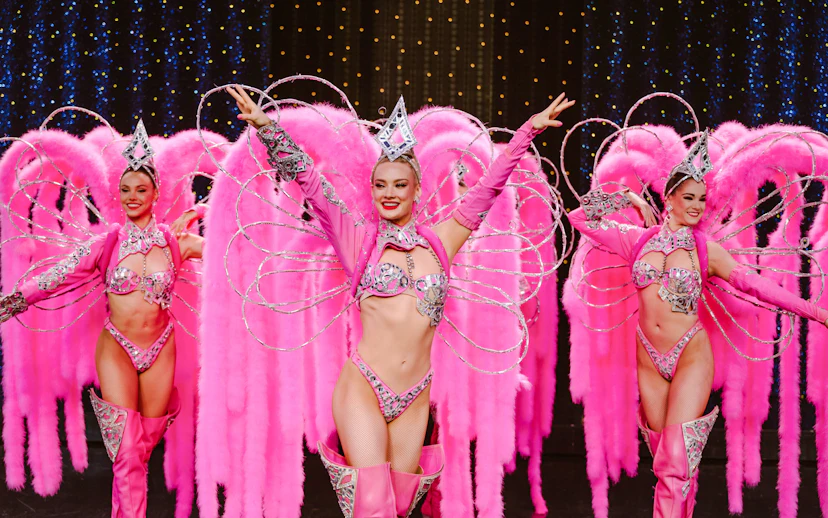
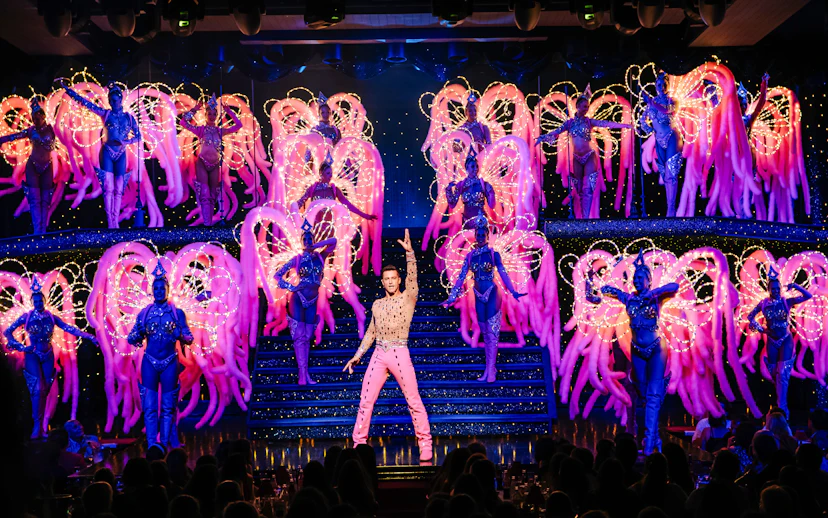
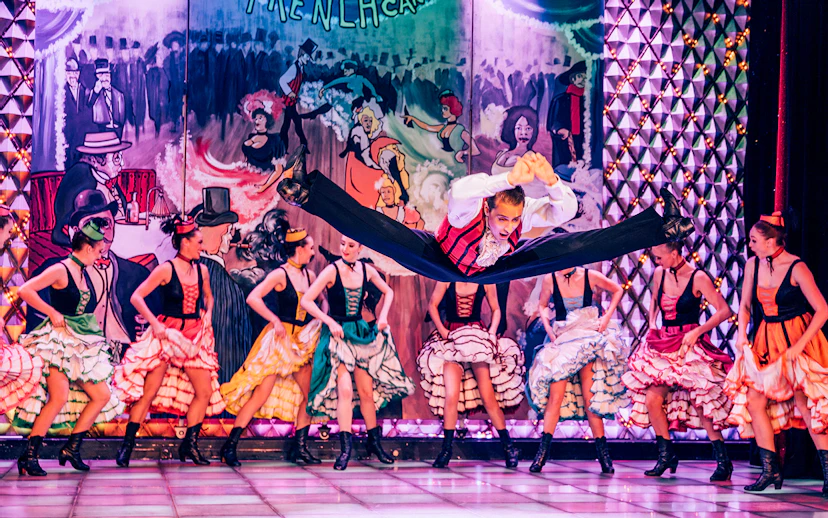
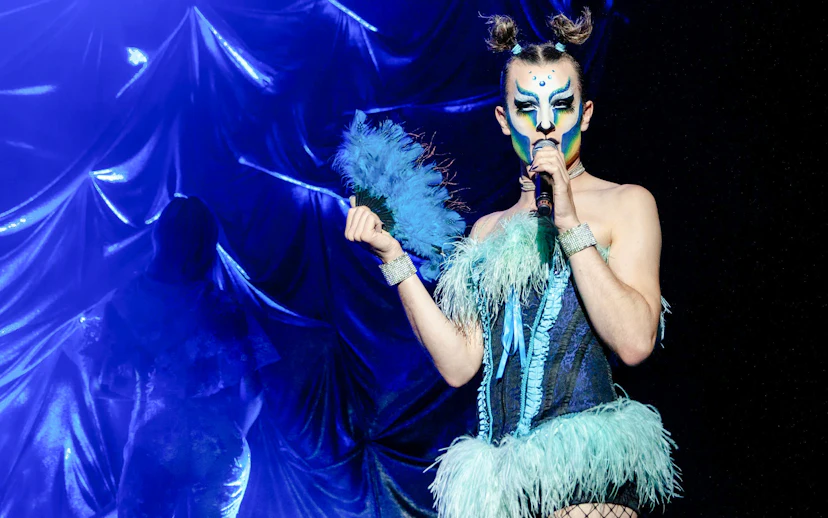
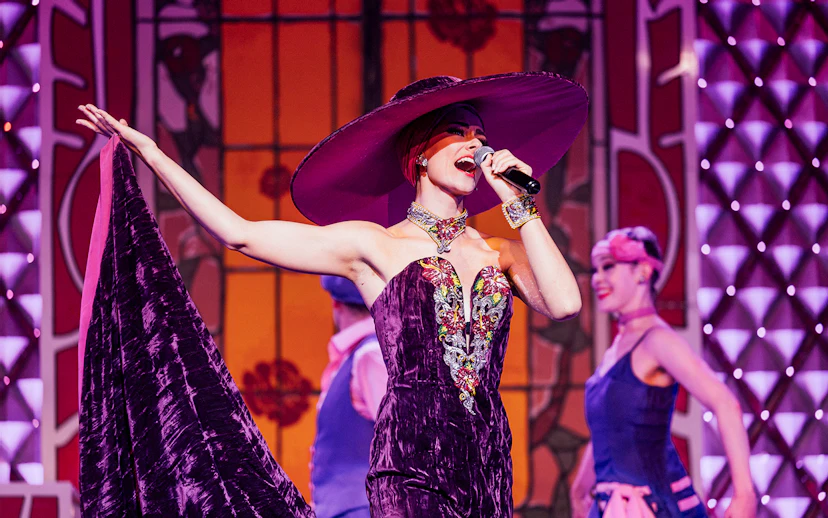
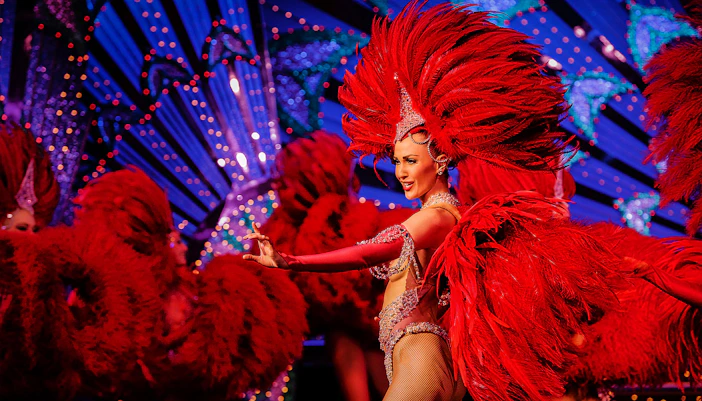
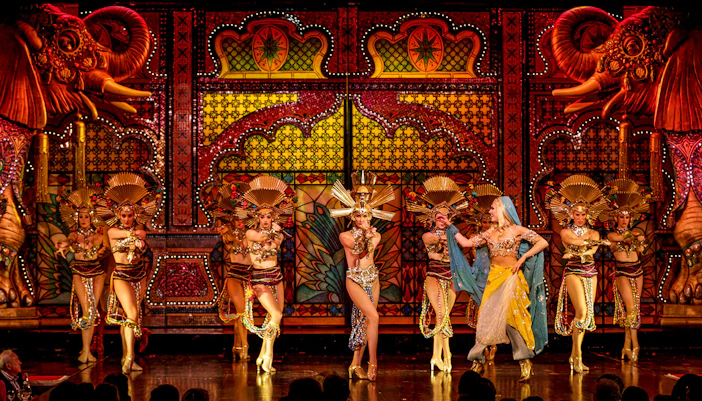
Today's dancers perform in Féerie, Moulin Rouge's resident revue. Across four major scenes, the production combines ensemble choreography with costumes, theatrical sets and international specialty acts, culminating in the French Cancan performed by the Doriss Girls.
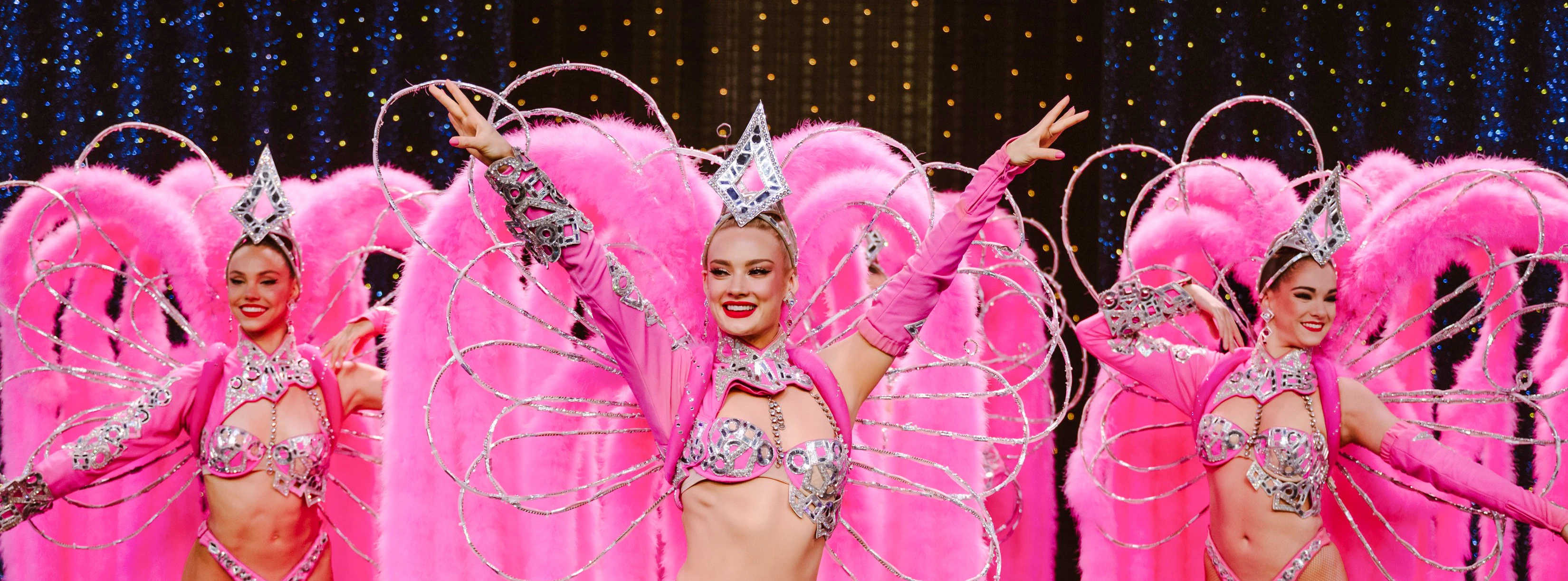
Moulin Rouge Dancers: From Cancan Legends to Today
Quick facts
- Dancing since: Moulin Rouge opened in 1889, with dance central to its cabaret identity from the Belle Époque onwards.
- Famous early dancers: La Goulue and Jane Avril became some of the best-known performers associated with the Moulin Rouge.
- Current show: Today’s dancers perform in Féerie, the resident Moulin Rouge revue.
- Signature dance: The French Cancan remains one of the defining moments of the show.
- On stage: Féerie combines ensemble choreography with large theatrical sets, elaborate costumes and specialty acts.
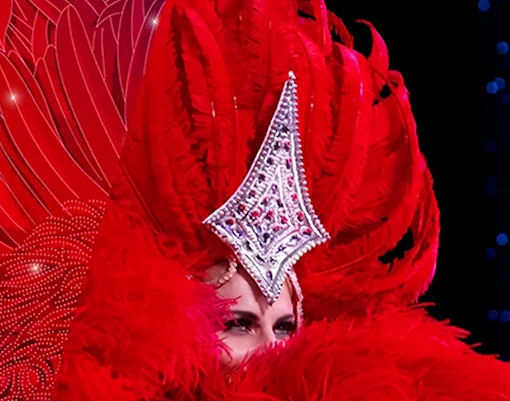
- Costumes: More than 1,000 costumes and accessories were handmade for Féerie, with some individual pieces taking up to 280 hours to create.
- The tradition today: Modern performances continue the Moulin Rouge dance tradition while presenting it as part of a large-scale contemporary revue.
Who are the dancers at Moulin Rouge?
The dancers at Moulin Rouge are not part of the show, but the show itself: the essence of the cabaret, captivating audiences with their talent, energy, and passion.

🎭 Elite performers
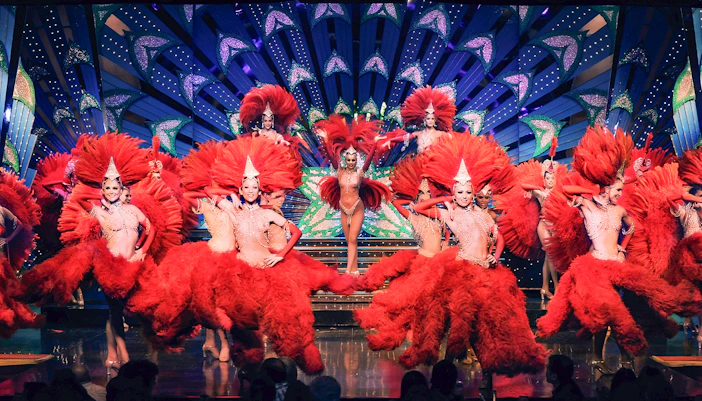
💃 The Doriss Girls
The Doriss Girls take their name from Doris Haug, who joined Moulin Rouge in 1957 and later developed the troupe with choreographer Ruggero Angeletti. They became closely associated with Moulin Rouge's large-scale revues and especially the French Cancan.

🌍 International troupe
Moulin Rouge has long recruited dancers internationally. The troupe developed from the original Doriss Girls created by Doris Haug, growing from just four dancers in 1957 to 60 Doriss Girls in later official material, with performers recruited from around the world.
How are the dancers chosen?
Becoming a Moulin Rouge dancer is a tough and competitive process. Dancers must have mastery in a variety of dance styles, including:
- Classical ballet
- Hip-hop
- Jazz
- Contemporary dance
But it's not just about technical skill, they must also possess stage presence and the ability to perform under extreme conditions, such as in elaborate costumes.
The audition process is intense, with dancers from all over the world competing for a spot in the world-famous troupe. They are assessed on:
- Technique
- Style
- Stage presence
- Stamina (performing in heavy costumes while maintaining energy)
The daily life of a Moulin Rouge dancer
Life as a Moulin Rouge dancer is more like being a top-level athlete than a typical performer. Dancers must be in top physical condition, and their days are highly structured. Their day typically looks like:
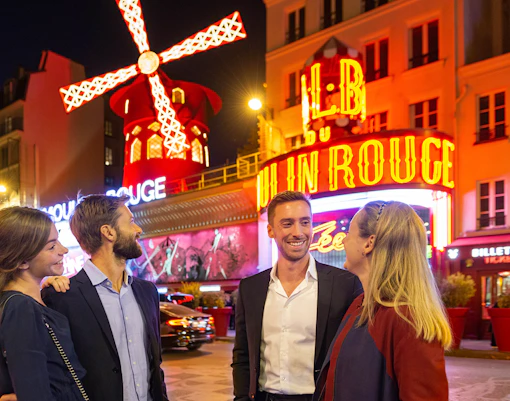
🕒 Morning rehearsals
The day starts with a warm-up and intense rehearsals to perfect the routine for that evening's show.
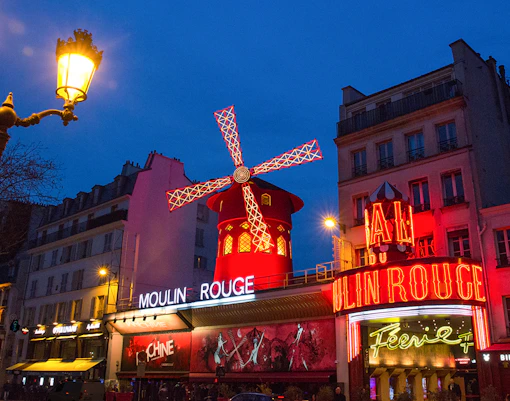
🏋️♀️ Physical training
Strength-building exercises are crucial for performing demanding routines like the French Cancan, which requires incredible stamina and flexibility.
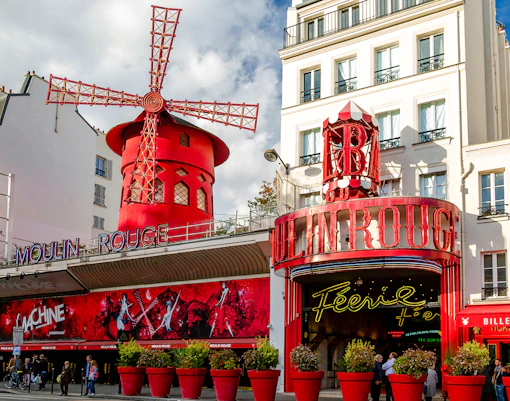
👗 Costume fittings
With 10-14 costume changes per show, each dancer has to be ready to slip into their sequin-adorned, feathered costumes at a moment's notice.
💄 Hair & makeup
The dancers undergo detailed hair and makeup sessions to ensure they look flawless under the stage lights.
🌟 Performance night
Whether they're performing as a lead dancer or part of the chorus, each dancer gives their best performance during the show. Doriss Girls, in particular, are known for their high-energy performances several times a week.
The Doriss Girls: The icons of Moulin Rouge Paris
No conversation about the dancers of Moulin Rouge would be complete without a special mention of the Doriss Girls—the legendary troupe of dancers that have been synonymous with the Moulin Rouge for decades.
Who are the Doriss Girls?
The Doriss Girls are a group of exceptional dancers who perform in the world-famous French Cancan and other iconic routines. Named after the legendary choreographer Doris Haung, these dancers are known for their athleticism, grace, and incredible stage presence. They have become a symbol of the Moulin Rouge, embodying the glamour, energy, and passion that the cabaret is famous for.
What makes them so special?
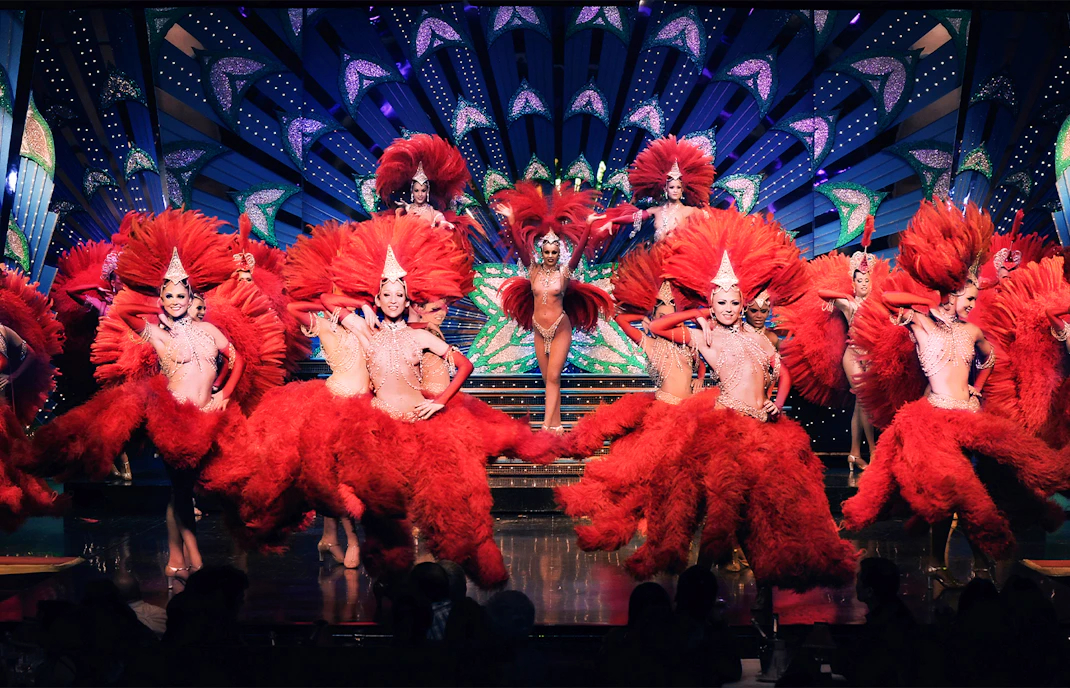
The Doriss Girls' routines are known for their high level of physicality, requiring dancers to execute complex choreography with precision, all while wearing heavy, ornate costumes. Each Doriss Girl is a trained athlete, capable of executing perfect pirouettes, acrobatic flips, and high-energy kicks, all while maintaining a flawless performance under the bright stage lights. Their commitment to their craft is clear, and their energy never falters, even after multiple costume changes and high-intensity routines.
A signature performance: The French Cancan
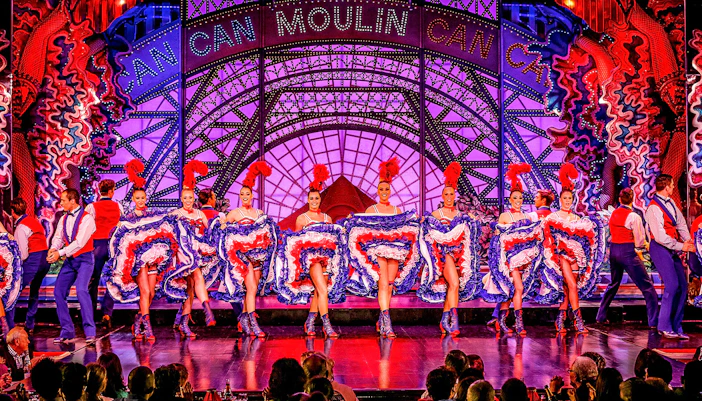
The French Cancan is arguably the signature dance of the Doriss Girls, and it’s a Moulin Rouge tradition that never gets old. These dancers are famous for their lightning-fast kicks, dazzling costumes, and high-flying energy. The Doriss Girls are known for their coordination and precision, executing moves like the pirouette, port d’armes, and the split jump with perfect timing.
🎬 Behind the scenes: The magic of preparation
What you don’t see is just as important as what you do. Backstage at Moulin Rouge, there’s a whole team working tirelessly to prepare for the show.
- Tech team: From 7pm, technicians fine-tune the lighting and sound for a perfect show.
- Dressers & costume designers: With 1,000 bespoke costumes and 500 pairs of shoes for Féerie, dancers undergo numerous costume changes between 10 to 14 times during the show. The costumes are as much a part of the performance as the dance itself.
See what happens behind the curtain 👉
Legends of Moulin Rouge: A legacy of dancers
Over the years, the Moulin Rouge has become a home for many iconic performers. Here are some of the legends who’ve made their mark:
✨ La Goulue and Nini Pattes en l’Air were some of the earliest stars of the French Cancan.
✨ Joséphine Baker, a trailblazing dancer and singer, became one of the first African-American women to star at the Moulin Rouge.
✨ Jane Avril, known for her captivating Cancan performances, was even immortalized by Toulouse-Lautrec.
🌍Did you know?
Moulin Rouge dancers hold world records for feats like the most leg lifts behind the head (30 in 30 seconds) and the most ronds de jambe (29 in 30 seconds). These feats require exceptional athleticism!
Frequently asked questions about Moulin Rouge Paris dancers
The Moulin Rouge employs around 80 dancers, including both men and women from all around the world. The performers are highly skilled in various dance styles, including ballet, jazz, contemporary, and the iconic French Cancan.
The French Cancan is a high-energy, leg-kicking dance that is synonymous with Moulin Rouge. It's known for its acrobatic moves, high-speed kicks, and theatrical performances. This dance is a key feature of the Moulin Rouge experience, showcasing the athleticism and charm of the dancers.
Yes, the dancers at Moulin Rouge perform multiple shows a week. The performances are grueling, and they must maintain peak physical fitness to handle the intense routines and demanding performances every night.
Yes, the dancers must be proficient in a wide range of dance styles, including classical ballet, contemporary, jazz, and hip-hop. Their diverse training allows them to perform a variety of routines with incredible skill and versatility.
Dancers are not just performers but storytellers, bringing energy, charisma, and emotion to the stage. Their performances, especially in the French Cancan, set the tone for the show, creating a lively, festive, and glamorous atmosphere that has become synonymous with Moulin Rouge.
Preparing for the French Cancan involves weeks of intense practice. Dancers focus on building leg strength, flexibility, and coordination. The routine requires quick kicks, jumps, and flawless synchronization, making it one of the most physically demanding and iconic parts of the show.
Typically, dancers do not interact with the audience after the show, as they need time to rest and recover. However, some may take part in special events or meet-and-greets as part of promotional efforts or for exclusive VIP guests.