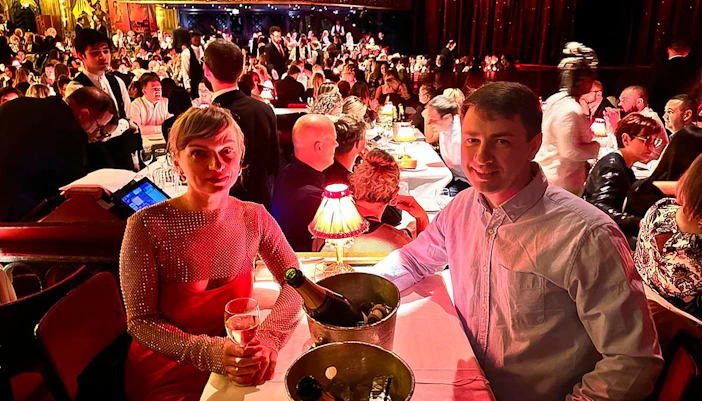
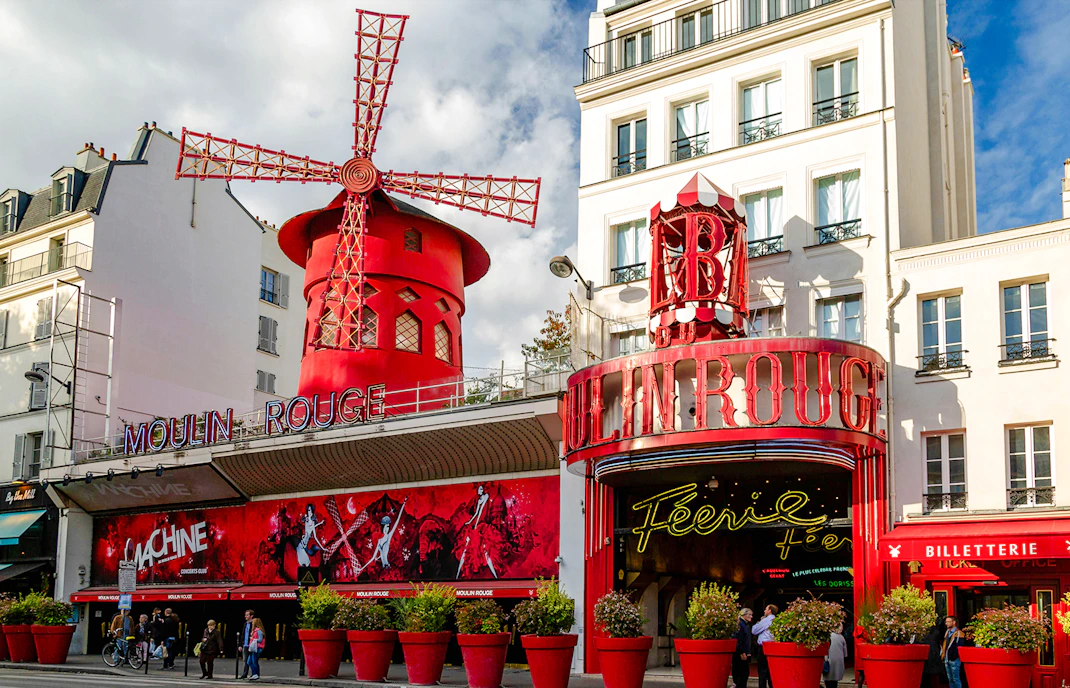
The story of Moulin Rouge Paris begins on October 6, 1889, when Joseph Oller and Charles Zidler opened its doors to the public. Situated at the foot of Montmartre hill, the cabaret was designed as a place for people from all social classes to mingle. Oller and Zidler envisioned an entertainment venue that blended luxury with the bohemian spirit of Paris.
Moulin Rouge Paris history: The cabaret that defined Parisian culture since 1889
A symbol of French culture, an emblem of the city’s vibrant nightlife, and a place where art, music, and dance have always converged in dazzling performances, Moulin Rouge Paris has, for more than a century, has attracted artists, performers and tourists from all over the world, becoming an international cultural icon. But how did this humble cabaret rise to such fame?
Let's take a step back in time and explore its fascinating story.
A quick timeline of Moulin Rouge Paris history
- 1889 | The doors open
Joseph Oller and Charles Zidler open Moulin Rouge in Montmartre on October 6, establishing a new landmark of Parisian nightlife. - 1890s | The Cancan takes centre stage
The French Cancan becomes closely associated with Moulin Rouge, while extravagant balls, revues and variety acts draw increasingly large crowds. - 1891 | Toulouse-Lautrec creates the iconic poster
Henri de Toulouse-Lautrec designs Moulin Rouge's first advertising poster, helping give the cabaret one of the most recognisable images in Parisian culture. - 1907 | Mistinguett makes her debut
Mistinguett appears at Moulin Rouge and goes on to become one of the great stars associated with its stage. - 1915 | Fire destroys the original venue
A fire destroys the Moulin Rouge, forcing the cabaret to close for a decade. - 1925 | Moulin Rouge reopens
The venue returns after being rebuilt, beginning a new chapter for the cabaret and its performances. - 1951-1959 | A new era begins
Jo France renovates the venue in 1951, followed by the Cléricos' management from 1955. In 1959, the dinner-show format is introduced. - 1962-1963 | Jacki Clérico transforms the show
Jacki Clérico takes over in 1962, introducing new spectacle and the tradition of revue titles beginning with "F" from 1963's Frou-Frou. - 1979-1981 | Moulin Rouge takes its show global
The cabaret celebrates its 90th anniversary with an all-star evening and later performs in London for the Royal Variety Performance. - Today | Féerie continues the tradition
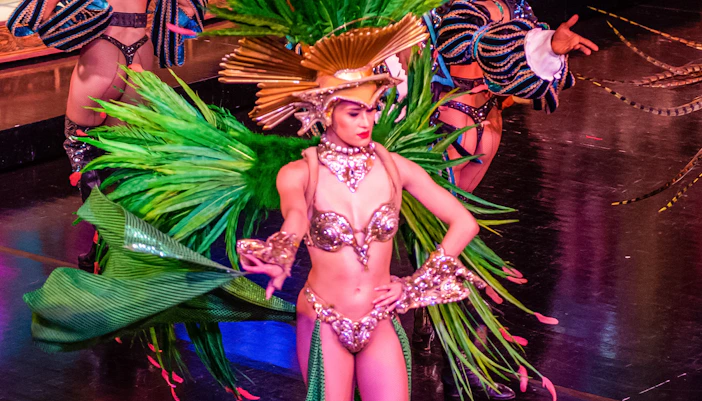
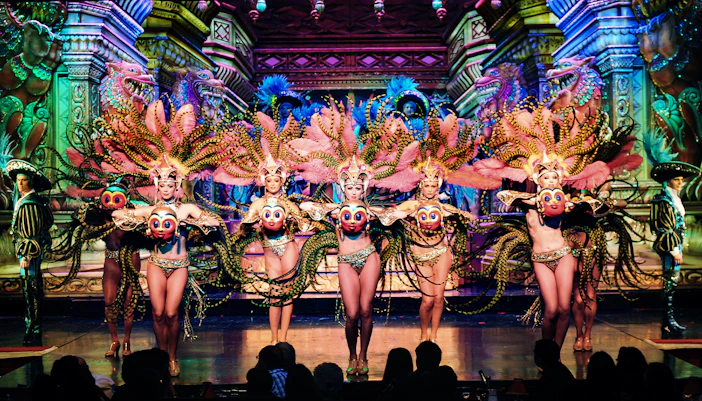
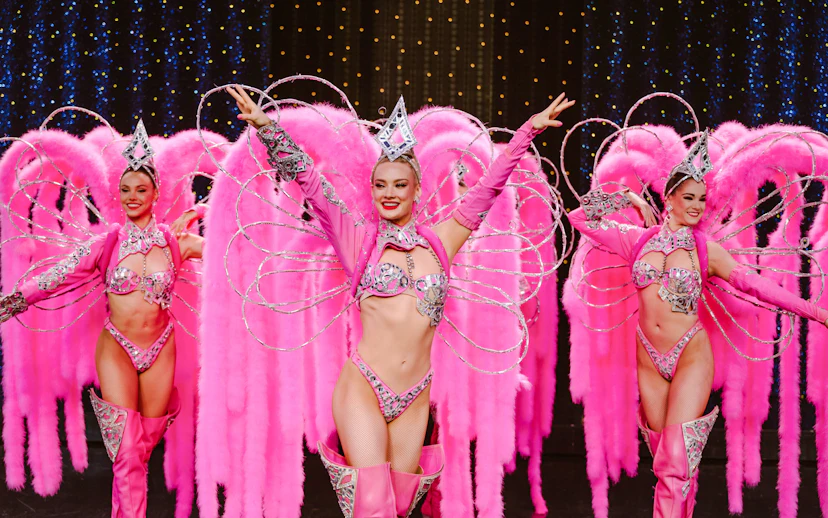
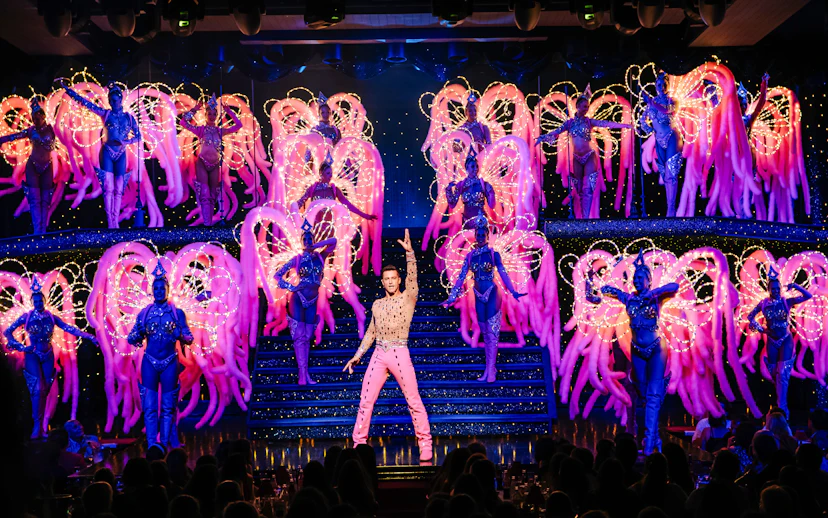
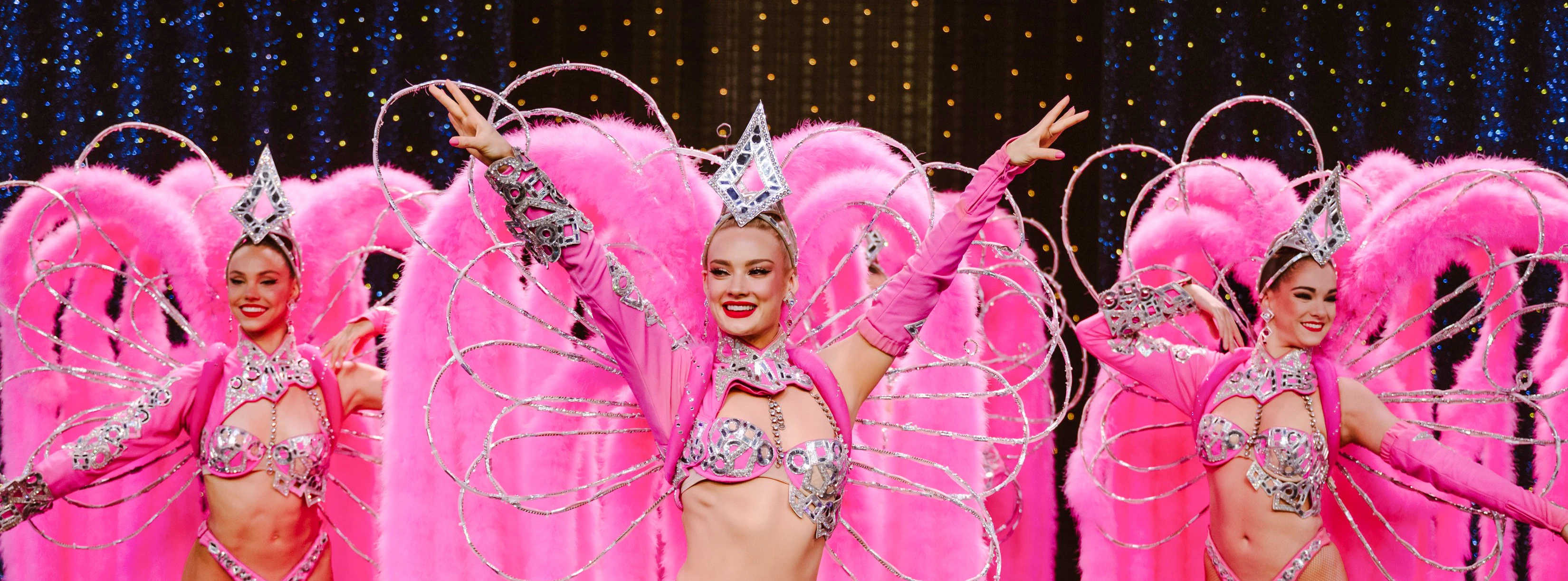
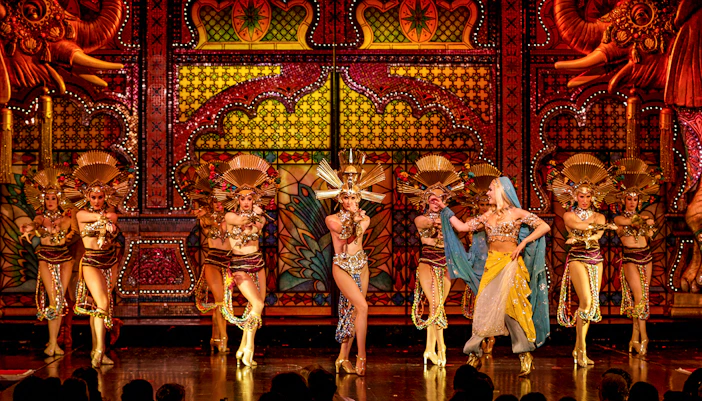
The current Féerie revue brings together 60 artists and dancers and continues Moulin Rouge's long tradition of large-scale live spectacle.
The birth of Moulin Rouge Paris (1889–1890s)
Founders and vision

The rise of the French Cancan
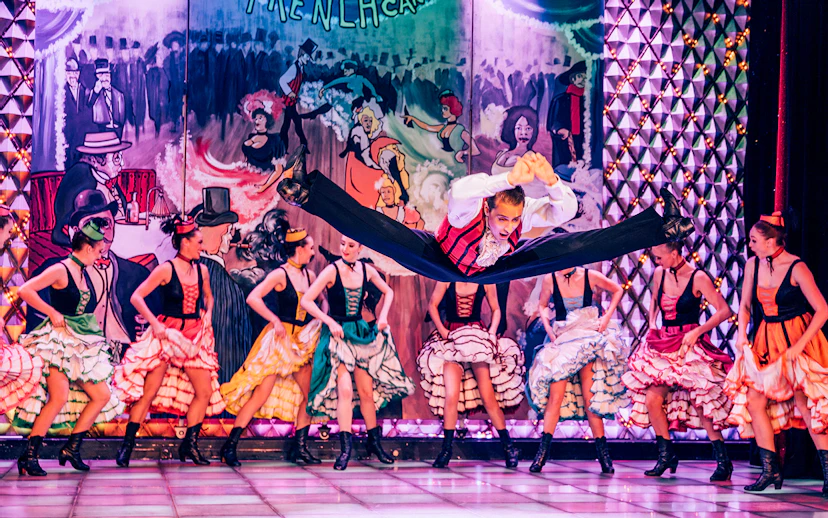
But what really set the Moulin Rouge apart? It was the can-can dance, a provocative and energetic performance that soon became synonymous with the cabaret. Moulin Rouge Paris was the birthplace of the modern can-can, which was both thrilling and scandalous at the time. The dance, often performed by women in racy costumes, was an instant hit. La Goulue, one of the first iconic dancers, became a legend in her own right, her high kicks and infectious energy drawing crowds from across Paris.
Now that we know how the Moulin Rouge got started, what happened next? How did this cabaret transform from a local favorite to a global sensation?
The Moulin Rouge’s golden age (1890s–early 1900s)
As the Moulin Rouge grew in popularity, it transformed from a lively dance hall into a vibrant artistic hub. Paris, home to many renowned artists, became the perfect backdrop for the venue’s cultural influence. The most iconic of these artists, Henri de Toulouse-Lautrec, captured the cabaret’s energy with his famous posters featuring La Goulue and other dancers. His art spread across Europe, making Moulin Rouge Paris a global sensation and a cultural touchstone.
Eccentric performances and unique acts
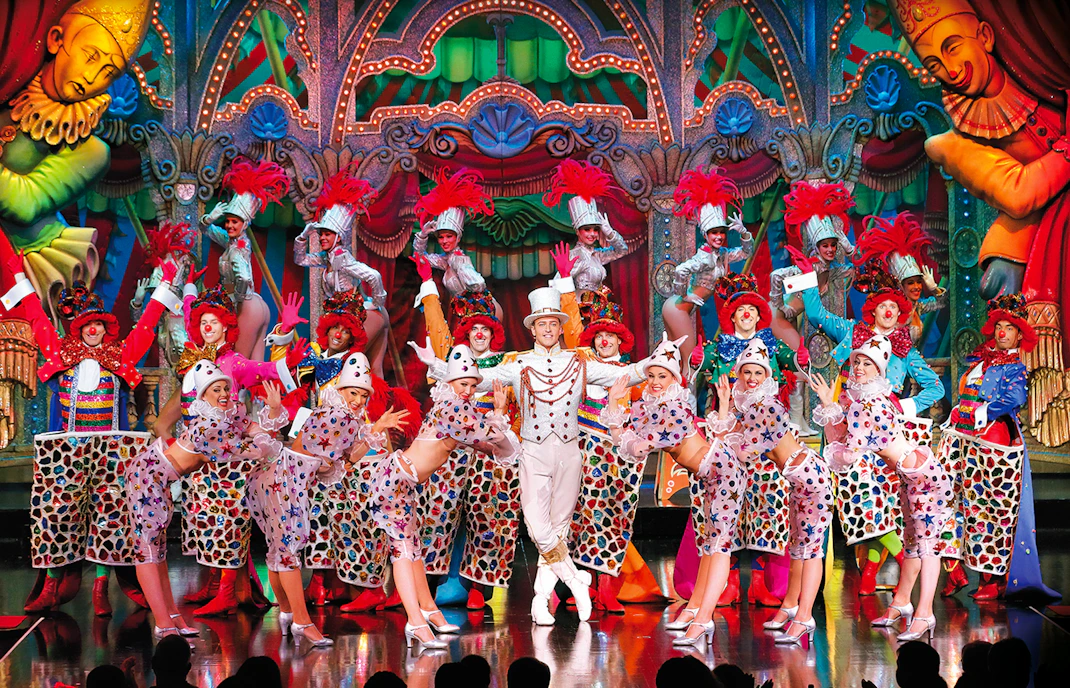
While the can-can stole the spotlight, Moulin Rouge Paris also featured eccentric acts that added a layer of creativity. Le Pétomane, a performer who played music by expelling air from his body, became a crowd favorite. These odd and humorous performances ensured the venue was always fresh, keeping audiences entertained with their unexpected, quirky charm.
Royal acknowledgment: Prince Edward VII's visit
The Moulin Rouge’s reputation even caught the attention of royalty. In 1890, Prince Edward VII visited and was famously greeted by La Goulue with the words, “Hey, Wales, the champagne’s on you!” This royal visit elevated the venue’s status, solidifying it as a premier Parisian entertainment destination.
Fire, closure and rebirth (1915–1925)
On February 27, 1915, fire destroyed the original Moulin Rouge. The cabaret remained closed for a decade before reopening in 1925 in a rebuilt venue. Its return marked the beginning of another chapter, proving that the Moulin Rouge could survive even a near-total break with its past.
Would the world still remember the cabaret, or had it seen its last performance?
Rebuilding and rebirth
After a decade of uncertainty, the Moulin Rouge reopened in 1925, completely rebuilt and more grandiose than before. The 1920s marked a new era for the cabaret, one that embraced modernity while maintaining its iconic charm. This period saw the rise of Mistinguett, one of France's most beloved singers and dancers. Her performances brought new energy to the cabaret, drawing large crowds and restoring its place at the heart of Parisian nightlife. The Moulin Rouge also embraced American revues, bringing a touch of jazz and international flair to the stage.
Surviving the war and renewed glory (1940s)
Having emerged from the ashes, the Moulin Rouge was once again thriving. But as time passed, would it be able to survive through the looming threat of war, or would it be lost to history?
World War II: The occupation years
When World War II arrived, the Moulin Rouge was forced to adjust. Under German occupation, the venue continued to operate, providing a form of entertainment for German soldiers. The cabaret became a place of escape during one of the darkest periods in history. Despite its survival during the war, the cabaret’s reputation was tainted by its association with the occupation.
Post-war revival: The return of Edith Piaf
After the liberation of Paris in 1944, the Moulin Rouge began its revival. Legendary performers like Edith Piaf graced the stage, helping to restore the venue’s former glory. The 1950s and 1960s ushered in a new era of rejuvenation, with major renovations and the introduction of modern performances like aquatic ballets. The venue was reborn, solidifying its position as the center of Parisian entertainment.
But the world of entertainment was changing, and Moulin Rouge Paris would have to adapt to new tastes and trends. Would it manage to hold onto its legacy, or would it fade into the background?
👉 After the liberation of Paris in 1944, the Moulin Rouge began its revival, breathing new life into its legacy.
👉 Legendary French singer Edith Piaf graced the stage, helping restore the venue’s former glory and reigniting its cultural significance.
👉 The 1950s and 1960s ushered in a period of major renovations, with the introduction of modern performances, such as aquatic ballets.
👉 The Moulin Rouge was reborn, solidifying its role as the center of Parisian entertainment and ensuring its place in the city's cultural fabric.
A resurgence of fame (1950s–1980s)
In the 1950s, Moulin Rouge Paris came under new ownership, leading to extensive renovations that modernized its look while retaining its charm. While the iconic can-can remained a staple, new acts and international stars like Luis Mariano and Josephine Baker brought fresh energy.
Throughout the 1960s and 1970s, the cabaret experimented with innovative performances, such as aquatic ballets, blending classical dance with modern spectacle. These changes helped maintain the Moulin Rouge's relevance, but the shifting entertainment landscape raised the question: how long it could stay popular in a world of changing tastes and new media?
The evolution: Moulin Rouge Paris’ global impact (1990s–present)

The immortalization in film
In 2001, the Moulin Rouge reached a new milestone in its journey. The release of Baz Luhrmann’s film Moulin Rouge! captured the spirit of the cabaret for a new generation. The film, starring Nicole Kidman and Ewan McGregor, showcased the romance, extravagance, and energy of the Moulin Rouge, reigniting global interest in the iconic venue.

A global cultural icon
The influence of the Moulin Rouge extends far beyond Paris. From the Green Mill bar in Chicago to films, restaurants, and even hotels inspired by the iconic venue, the Moulin Rouge’s legacy can be found around the world. Its glamour and energy have influenced countless artists and performers, making it a key piece of global pop culture.
A continuing legacy of art and performance
Whether in music videos, stage adaptations, or Broadway revues, the Moulin Rouge’s artistic spirit continues to inspire the world. Its story is a testament to the enduring power of creativity, resilience, and the joy of performance. As long as there is a stage and an audience, the Moulin Rouge will remain a symbol of artistic freedom and expression.
Frequently asked questions about Moulin Rouge Paris history
Originally opened as the "Jardin de Paris," it was an open-air garden café-concert featuring extravagant decor, including a giant mechanical elephant. Its design promoted rapid décor changes and social interaction across classes.
Famous artists Henri de Toulouse-Lautrec and others were regulars and created iconic posters and paintings that contributed to its international renown and legendary status as an artistic hub.
In 1959, the Moulin Rouge installed new kitchens and launched the dinner show format, becoming a unique combination of gourmet dining and cabaret performance, which continues today.
Founders Joseph Oller and Charles Zidler called it "Le Premier Palais des Femmes" because it celebrated women performers spectacularly, especially through the vibrant and sometimes scandalous French Cancan dancers, making women the central attraction and symbol of the venue.
This event featured a nude Cleopatra surrounded by naked women in a procession, causing public outrage and cementing Moulin Rouge’s reputation for pushing artistic and social boundaries.
Starting from the 1960s under manager Jacki Clérico, the cabaret introduced shows titled with “F” (like Féerie), blending elaborate costumes, dance, and music—a tradition kept alive and evolving to today.
Montmartre was a vibrant bohemian district at the foot of a hill, attracting artists, writers, workers, and tourists. This diverse social mix helped make Moulin Rouge a melting pot of cultures and classes, fostering its unique atmosphere and appeal.