Moulin Rouge Show: What Is Féerie Like?

Féerie is Moulin Rouge’s resident cabaret revue, bringing together four main scenes, large-scale dance numbers, specialty acts, elaborate sets, 1,000+ costumes, and the French Cancan. Rather than following one continuous storyline, the show moves between different worlds and performance styles, with the Doriss Girls taking the stage for its signature Cancan sequence.

  • 🎭 Show: Féerie
  • ⏱️ Duration: About 1 hour 40–45 minutes
  • 💃 Expect: Dance, specialty acts, costumes, and the French Cancan
  • 🥂 Choose from: Show with Champagne or dinner + show
  • 📸 Photography: Not permitted during the performance

💃🏼 Watch 60 performers light up the stage in glittering costumes

🥂 Sip champagne as the legendary can-can takes center stage

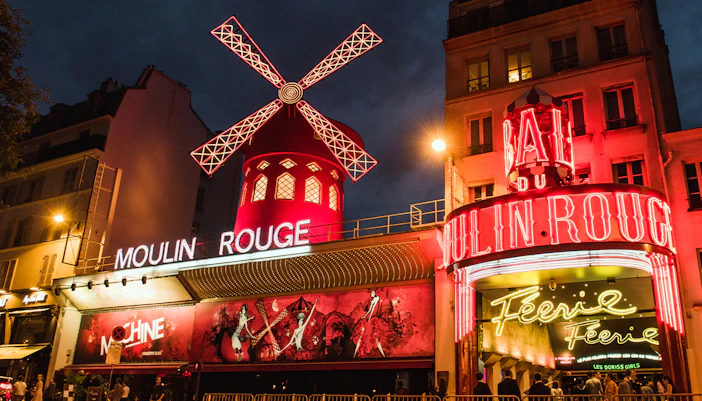
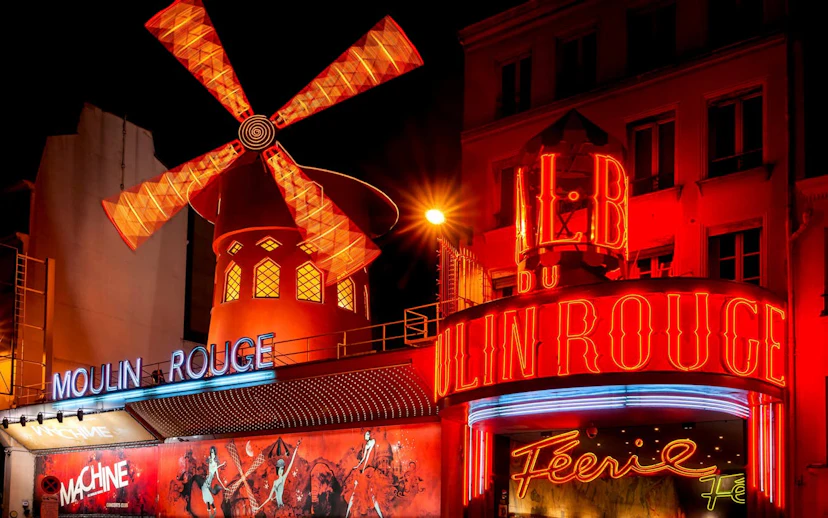
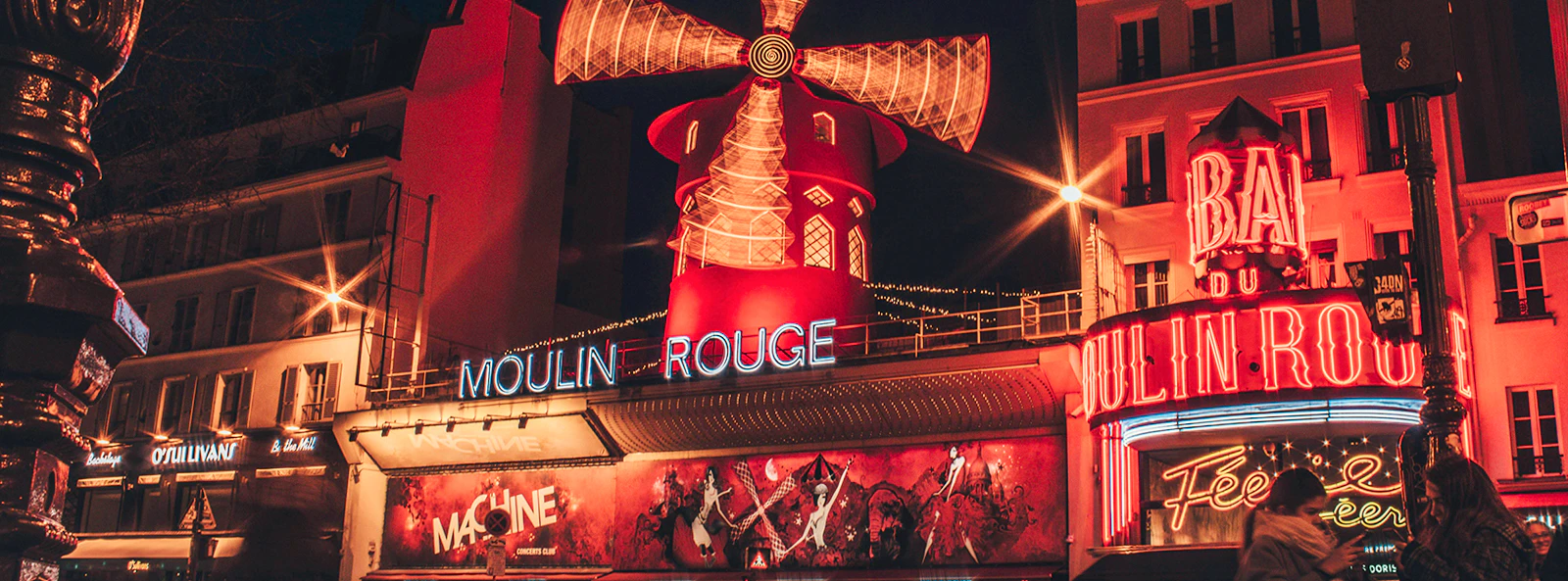
🌃 Experience an icon of Parisian nightlife, unchanged in spirit since 1889

🍽️ Choose from show-only, dinner + show, or combo tickets with city tours

💡Whether you are here for the bubbles or the full Parisian feast, find the right tickets that suit your night. Remember, tickets sell out fast. Book early to secure your seat in Paris' most iconic cabaret.

What happens during Féerie?

Féerie is structured around four main scenes, with specialty acts appearing between the larger ensemble performances. Each scene changes the setting, costumes, and style of performance rather than continuing one single narrative.

1. The Moulin Rouge, past and present

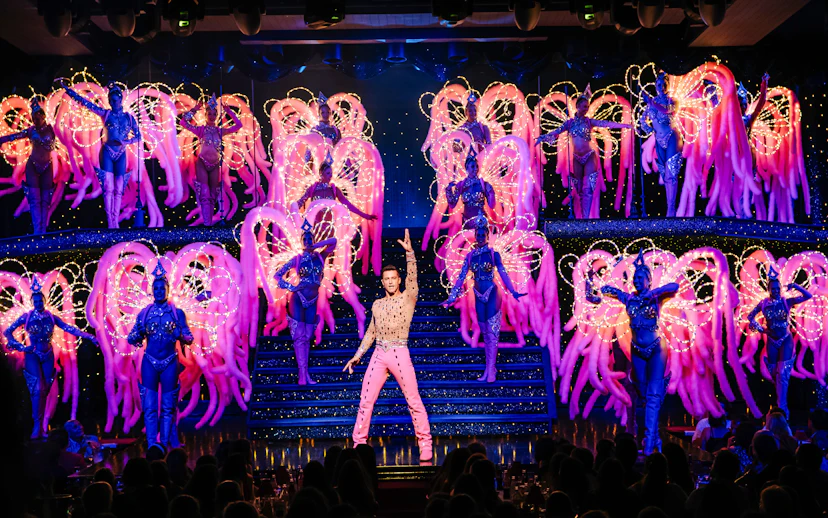
The revue opens with the full company and immediately establishes the scale of the production. Dancers, costumes, music, lighting, and large sets introduce an imagined world inspired by Moulin Rouge past and present.

This is where you first see how Féerie differs from a conventional theatre production: the stage is designed for large ensemble choreography and rapid visual changes rather than dialogue-heavy storytelling.

Look out for: The full troupe, large-scale choreography, and the first major costume changes.
2. The pirates

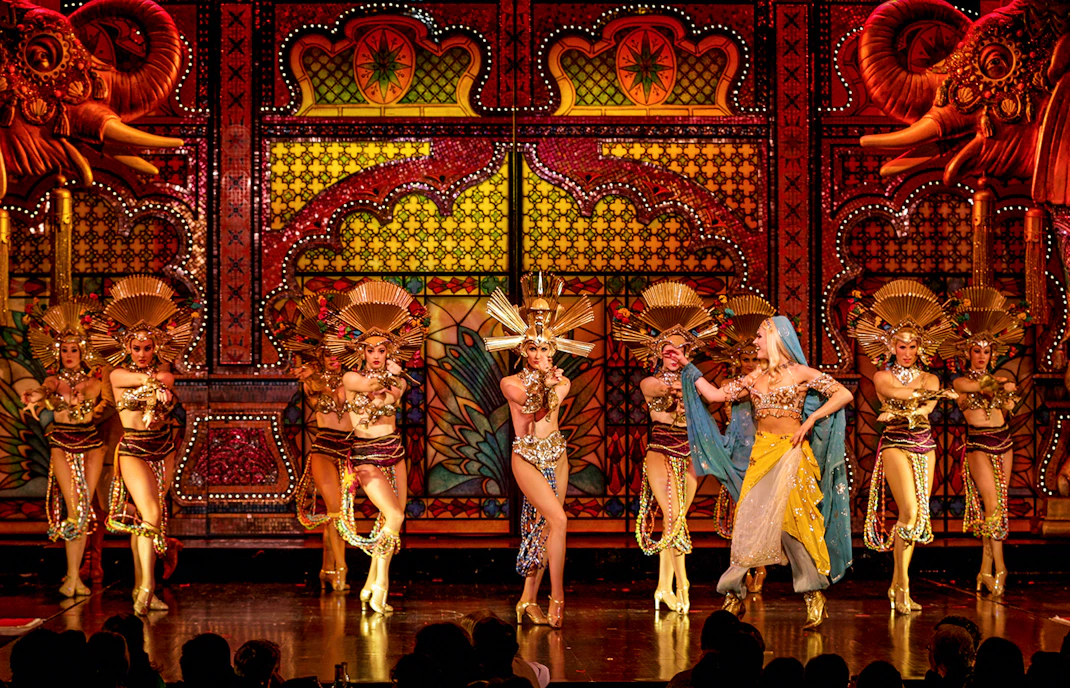
The second scene moves away from Paris into a fantasy adventure built around a pirate ship anchored in Indonesia.

Pirates, priestesses, mythical characters, treasure, and romance turn this section into one of Féerie's most theatrical sequences. The emphasis shifts from classic cabaret imagery towards fantasy staging and spectacle.

Look out for: The pirate-ship setting, fantasy costumes, and dramatic scene changes.

3. At the circus

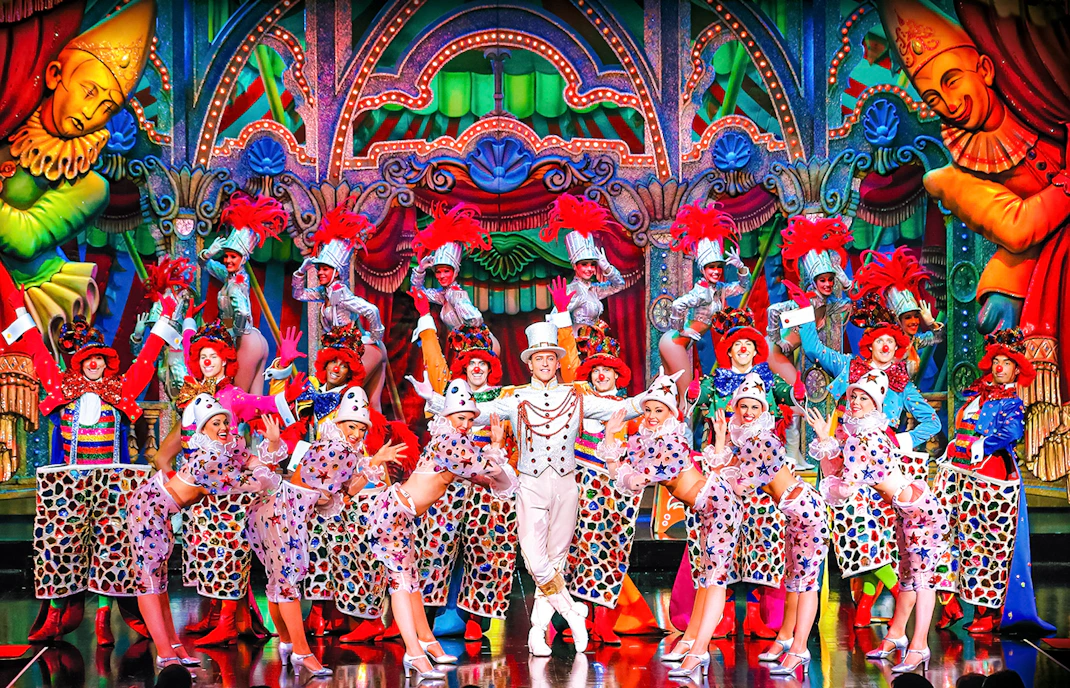
Féerie then moves into the world of the circus, bringing dancers together with clowns, mimes, jugglers, acrobats, and other performers.

This scene helps break up the large dance sequences and shows how much of Féerie draws from the wider European music-hall and variety-show tradition rather than dance alone.

Look out for: Acrobatics, circus-inspired costumes, and specialty performances woven into the choreography.

4. The Moulin Rouge from 1900 to today

The final scene brings the revue back to Paris, tracing different periods of the city's entertainment history before reaching Féerie's signature payoff.

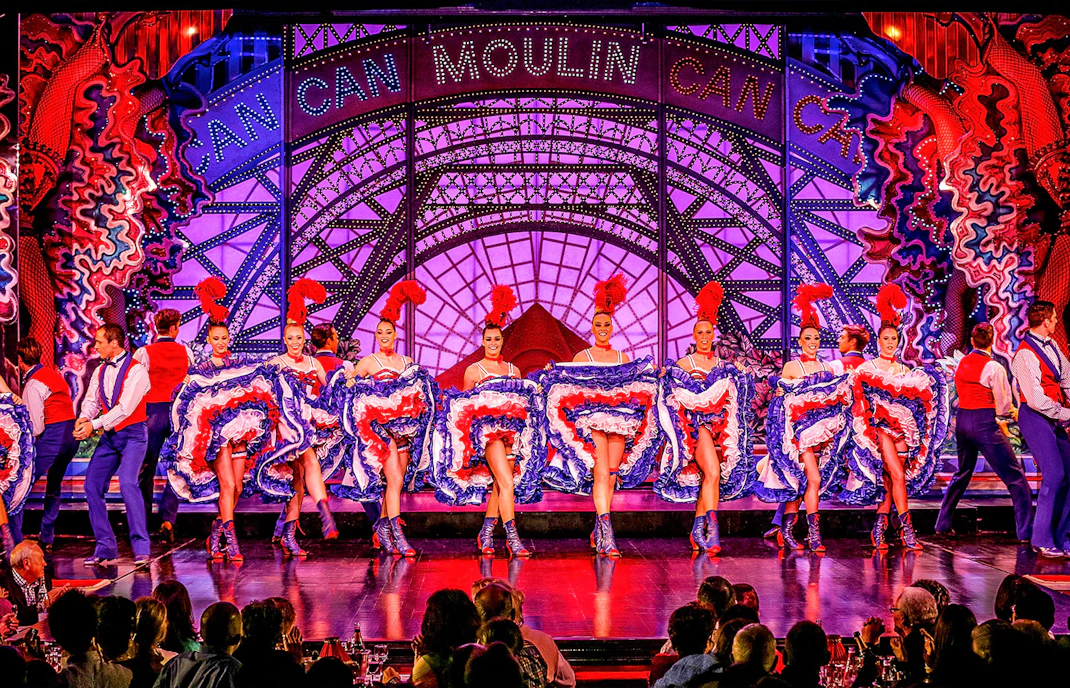
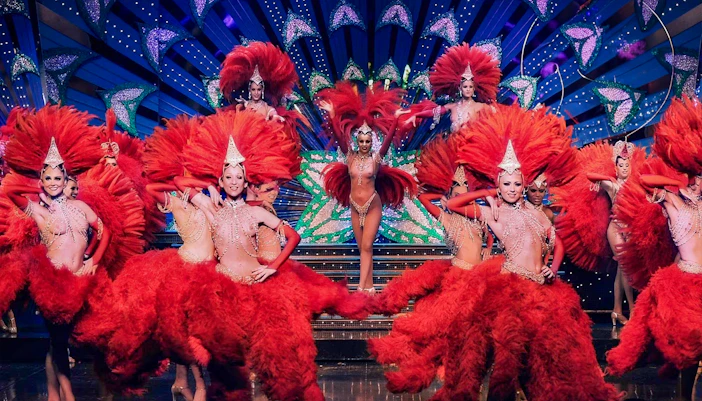
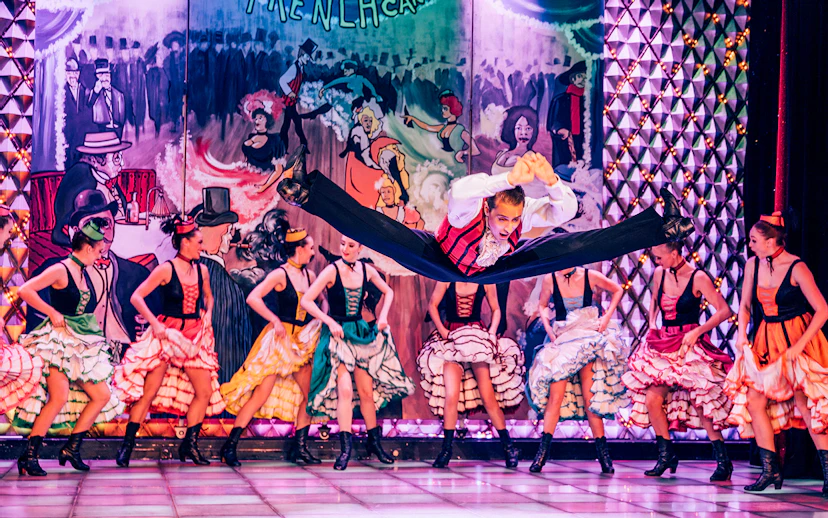
This is where the French Cancan takes centre stage, with the dancers performing the high kicks, splits, fast footwork, and skirt choreography most closely associated with Moulin Rouge.

Look out for: The French Cancan and its blue, white, and red costumes.

Beyond the four scenes: Féerie's variety acts

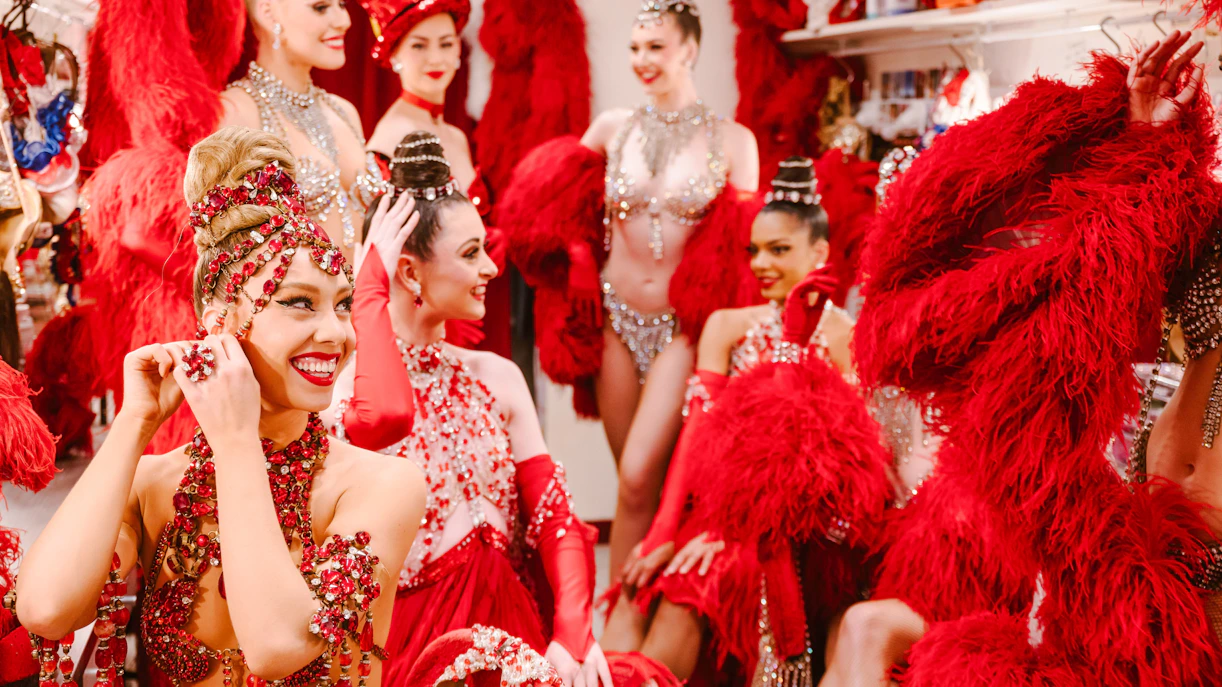
Performers in red costumes preparing backstage for the Moulin Rouge Show in Paris.
  • Specialty acts appear between Féerie’s four main scenes, adding variety to the larger dance sequences.
  • Depending on the programme, these can include acrobatics, balance acts, roller performances, and precision routines.
  • The lineup can change, so think of them as rotating variety acts rather than a fixed “fifth act.”
  • Why it matters: Féerie is more than Cancan and ensemble dance, with specialty performances adding a different pace and style to the show.

What is it like watching Féerie inside Moulin Rouge?

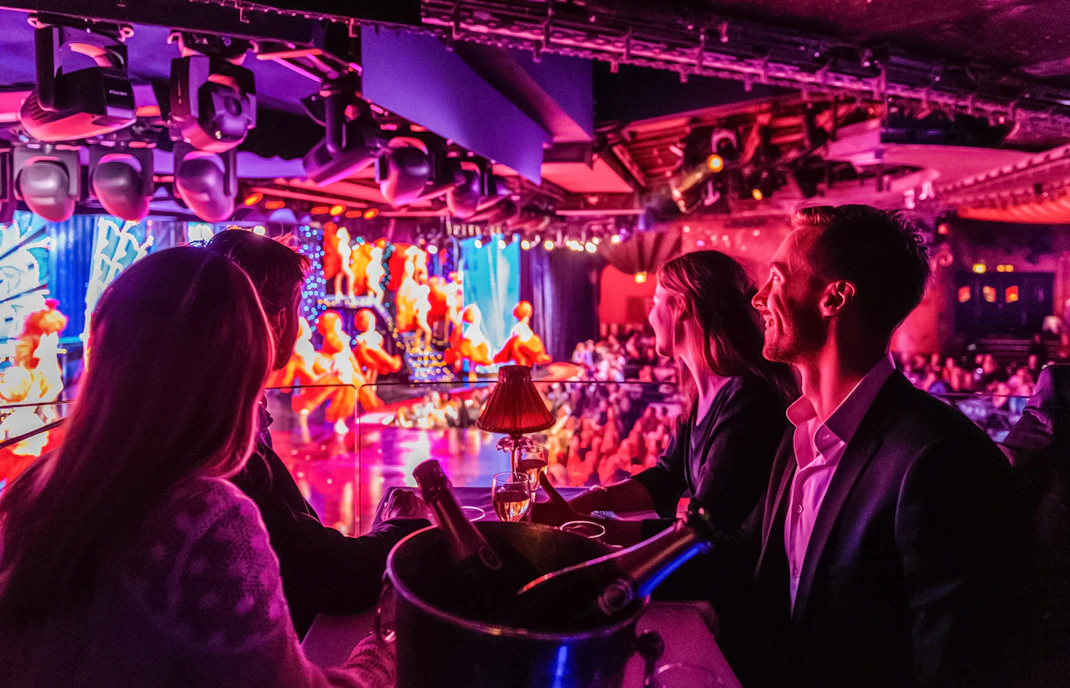
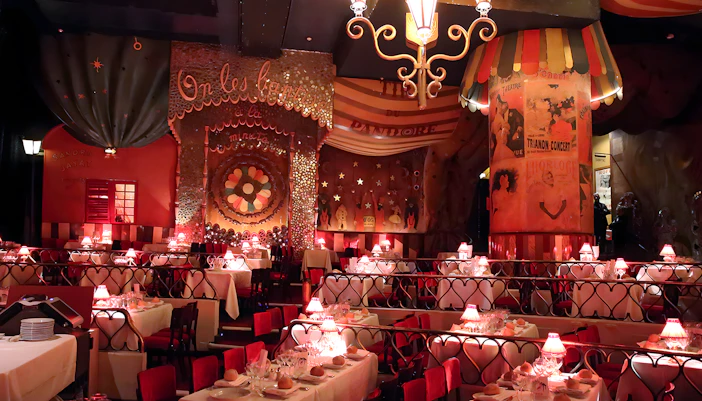
Féerie takes place inside Moulin Rouge's cabaret auditorium, where tables and small glowing red lamps replace conventional rows of numbered theatre seats.

The current auditorium accommodates around 850 guests, while the main room covers approximately 1,000m². Despite the scale, the table-based arrangement keeps the performance visually connected to the audience.

Standard seating

With standard tickets, you do not choose a specific seat or table at checkout. Moulin Rouge prepares its seating plan each day, and the maître d' shows you to your allocated table when you arrive.

Your exact viewing position therefore depends on the table assigned by the venue.

Prestige seating

Prestige changes the seating and entry experience rather than the show itself.

Current Prestige experiences include priority access and privileged seating, with published options using a private balcony overlooking the room and stage.

Good to know: Adding Champagne to a standard ticket does not provide a verified seating advantage. If your priority is your seat or entry experience, Prestige is the meaningful upgrade.

Dancers and costumes of Féerie

The dancers are at the heart of Féerie, moving between large ensemble numbers and the physically demanding French Cancan.

💃 The dancers

The production brings together an international company of dancers and specialty artists, with the Doriss Girls taking centre stage for the French Cancan.

👗 The costumes

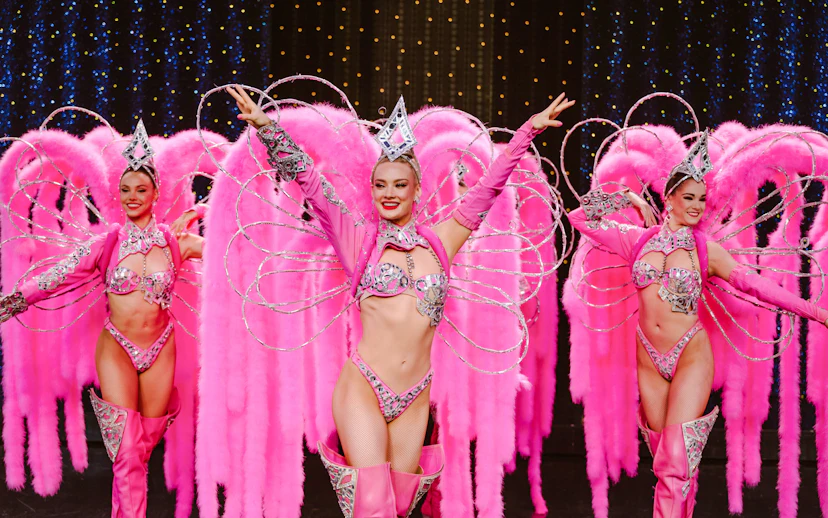
Féerie uses more than 1,000 costumes, with feathers, sequins, and rhinestones defining much of its visual style. Frequent costume changes also give each of the four scenes its own look.

Discover the Moulin Rouge dancers 👉

Frequently asked questions about the Moulin Rouge Paris show

The current resident revue is Féerie, a four-scene cabaret show featuring dance, specialty acts, elaborate costumes, and the French Cancan.

More reads

All about Paris cabarets

All about Paris cabarets

Timings

Timings

Directions

Directions