RECOMMENDED DURATION
4 hours
Timings
19:00–01:00
VISITORS PER YEAR
600000
TICKETS
From $112.98
EXPECTED WAIT TIME - STANDARD
1-2 hours (Peak), 30-60 mins (Off Peak)
EXPECTED WAIT TIME - SKIP THE LINE
0-30 mins (Peak), 30-60 mins (Off Peak)
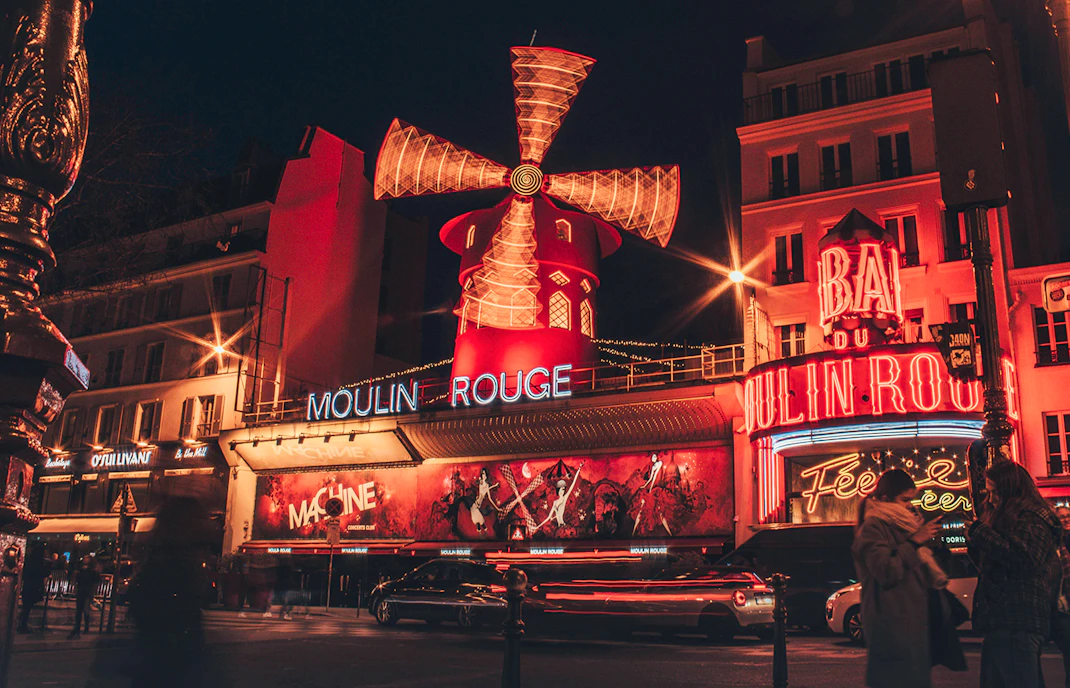
The Moulin Rouge was the first building in Paris to shine with electric lights, its colorful facade designed by Adolphe Léon Willette to sparkle across Montmartre.
Every sequin and feather on the costumes is handcrafted by a dedicated on-site atelier, working around the clock to keep the magic alive.
Since 1957, every show starts with the letter “F,” a tradition sparked by Doris Haug’s belief that these names would bring great success— the superstition still holds strong today.

The Moulin Rouge opened in Paris’s Montmartre district on October 6, 1889, co-founded by Joseph Oller and Charles Zidler. With its red windmill and extravagant decor, it quickly became a symbol of the Belle Époque, catering to both the wealthy and the working class. Its debut coincided with the 1889 Exposition Universelle, helping it become a must-see attraction in Paris.
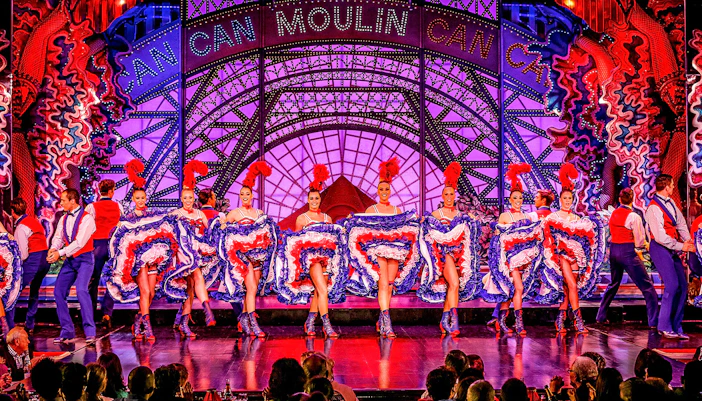
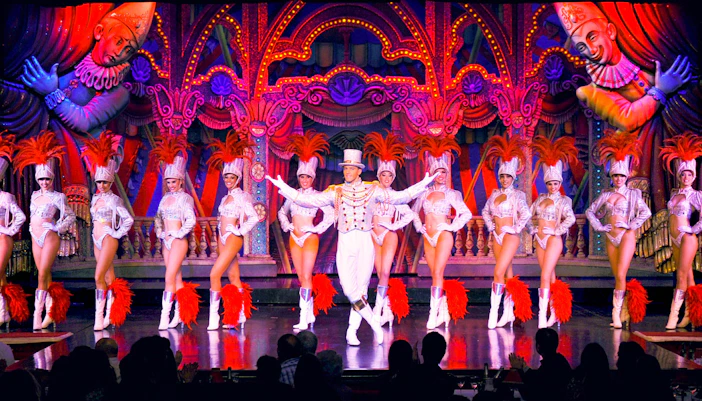
By the 1890s, the Moulin Rouge became synonymous with the French cancan, a high-energy, provocative dance that captivated audiences. The Dames de la Canne dazzled with their athleticism and flair, and the cancan soon became the venue’s signature performance, symbolizing the joy and freedom of the era.
Artist Henri de Toulouse-Lautrec immortalized the Moulin Rouge with his iconic posters. His vibrant works captured the energy of the cabaret and spread its fame beyond Paris. Through his art, the Moulin Rouge became a global symbol of Parisian nightlife, adding an artistic dimension to its cultural status.
In the early 1900s, the Moulin Rouge shifted from cancan to operettas, drawing new audiences. The 1900 Universal Exhibition solidified its reputation, but in 1915, a fire destroyed the venue during World War I. Despite the setback, the Moulin Rouge reopened in 1921, surviving both the war and the challenges of the Great Depression.

During WWII, the Moulin Rouge remained open, serving German soldiers during the occupation. Despite the difficult circumstances, the cabaret endured. In the final days before Paris's liberation, Édith Piaf performed there, becoming a symbol of resistance and resilience, embodying the spirit of the Moulin Rouge during the darkest times.

After the war, Jo France took over the Moulin Rouge in 1951, modernizing it with renovations and introducing dinner shows that combined fine dining with entertainment. In the 1960s, Jacki Clérico brought aquatic ballets and introduced a superstition of naming shows with the letter “F,” beginning with Frou Frou in 1963, ensuring the venue’s ongoing popularity.

With Jacki Clérico at the helm, the 1960s and 1970s saw the Moulin Rouge embrace a blend of traditional cabaret and modern spectacle. The introduction of aquatic ballets and continued innovation in performances ensured the venue remained at the forefront of Parisian entertainment, captivating both locals and tourists alike.

In the 1980s and 1990s, the Moulin Rouge saw an international revival. Global tourism flocked to Paris to witness its storied performances. The venue underwent renovations to maintain its grandeur, continuing to symbolize the bohemian spirit of Paris while embracing modern elements to keep its appeal fresh.

The Moulin Rouge’s influence extended into films, most notably in Baz Luhrmann’s 2001 movie Moulin Rouge!. The film introduced the cabaret to a new generation, cementing its place as an icon of Parisian creativity and exuberance, further securing its legacy in popular culture.
We now know that the history of Moulin Rouge Paris is one of resilience and reimagination– but what about the philosophy behold all that glam? The Moulin Rouge was born during the height of the Belle Époque, a time when Paris was a hub of artistic and cultural innovation, and the cabaret quickly became a symbol of freedom, sensuality, and celebration of life. The iconic French cancan, with its daring high kicks and colorful costumes, has come to represent this spirit of joy and liberation.
Every performance, every light, every movement is part of a larger celebration that brings the essence of Parisian culture to life.

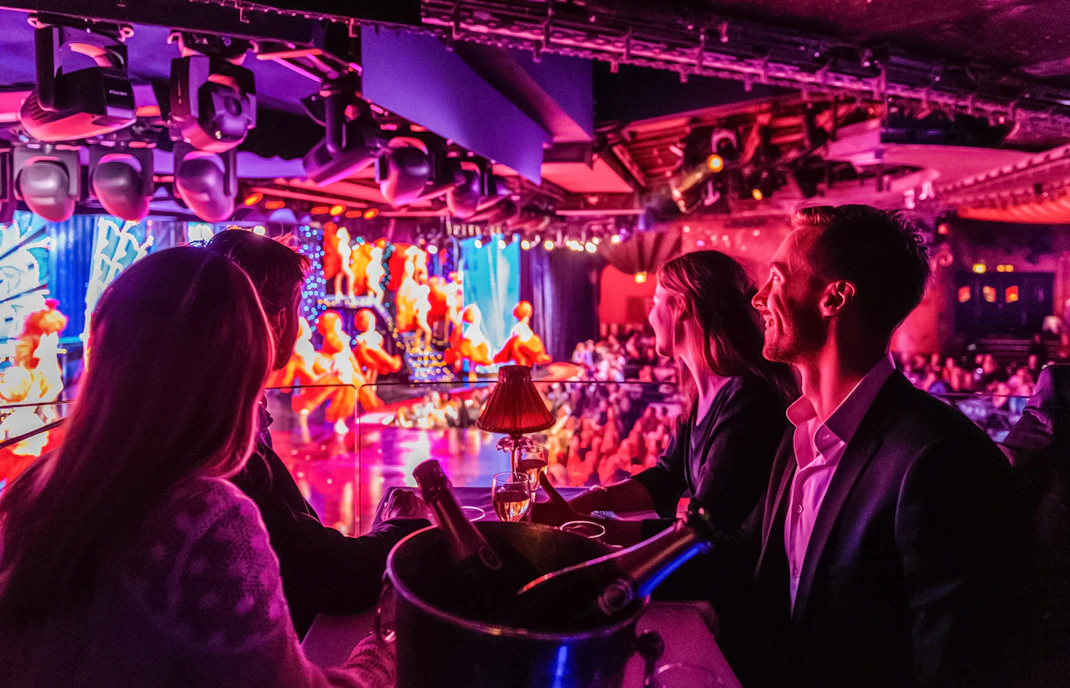
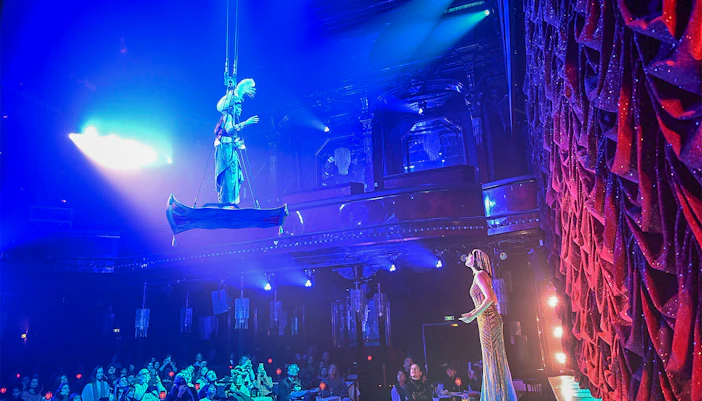
Lighting at the Moulin Rouge isn’t just there to brighten the stage—it’s a key player in telling the story. The lights shift and change throughout the show, responding to the rhythms of the music and the emotions of the dancers. This creates an ever-changing atmosphere that brings each performance to life, adding depth and drama to the experience.

The choreography, too, goes beyond just dancing. Each routine tells a story—sometimes playful, sometimes passionate—but always emotionally engaging. With live music, intricate costume changes, and moves that flow seamlessly together, the performances are a feast for both the eyes and the soul. It’s a blend of theater, dance, and music that invites you to feel every moment.

The Moulin Rouge was built on a bold idea: to be a place where women could freely express themselves through dance and performance. In a time when society was rigid and male-dominated, this vision was revolutionary. Today, it stands as a symbol of empowerment, embracing the strength and creativity of women and celebrating their voices on stage.
Despite the challenges the Moulin Rouge has faced over the years—from financial struggles to societal criticism—it has remained true to its roots.
This was a period of cultural growth in Paris, with Montmartre attracting artists, writers, and performers. The Moulin Rouge aimed to bring together people from all walks of life, blending high society with bohemian culture, and creating an inclusive, lively atmosphere.
The Moulin Rouge became a hub for the creative minds of the era, with artists like Henri de Toulouse-Lautrec drawing inspiration from the performances there. His iconic posters and paintings immortalized the venue, capturing its vibrant energy and making it famous worldwide.
Montmartre was central to the Impressionist movement, with artists like Monet and Renoir shaping the focus on light, color, and everyday life. These influences carried over into the visual style of performances at the Moulin Rouge, which became known for their dynamic and colorful energy.
The bohemian lifestyle that thrived in Montmartre fostered an environment of artistic freedom and experimentation. This led to the creation of bold new performance styles, such as the French cancan, which became synonymous with the Moulin Rouge and symbolized its avant-garde spirit.
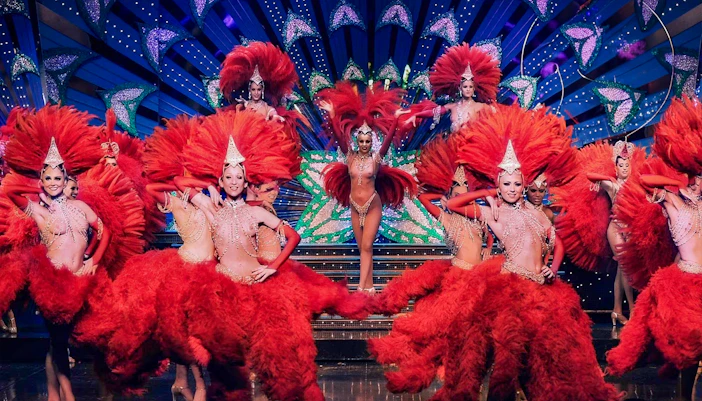
Moulin Rouge wouldn’t be what it is today without its Doriss Girls: the troupe of dancers at the cabaret. Founded by choreographer Doris Haug in 1957, the group has grown from four dancers to about 60, becoming a symbol of the Moulin Rouge's reputation for top-tier entertainment.

The French cancan, a high-energy dance with kicks, acrobatics, and colorful costumes, is one of the troupe’s signature moves. The routine requires exceptional skill, including pirouettes and splits, all performed with athletic precision and flair.

Training is rigorous for a Doriss Girl, with daily rehearsals, warm-ups, and makeup sessions to prepare for performances. Staying in peak physical condition is crucial for the demanding shows, which are held several times a week and last about three and a half hours, divided into two acts.

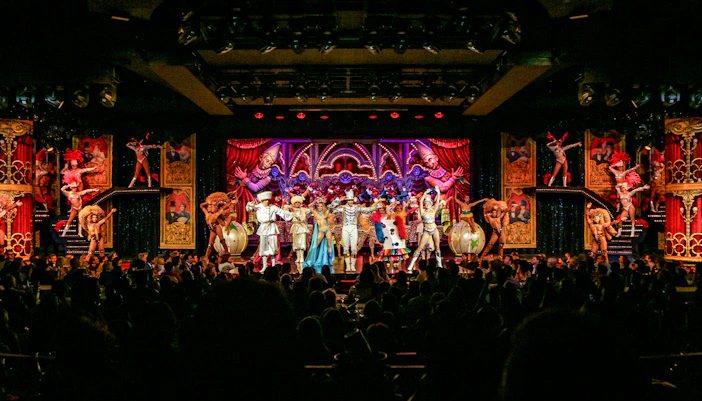
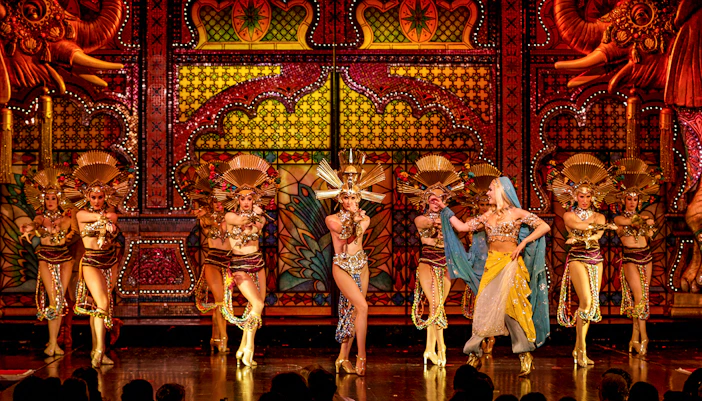
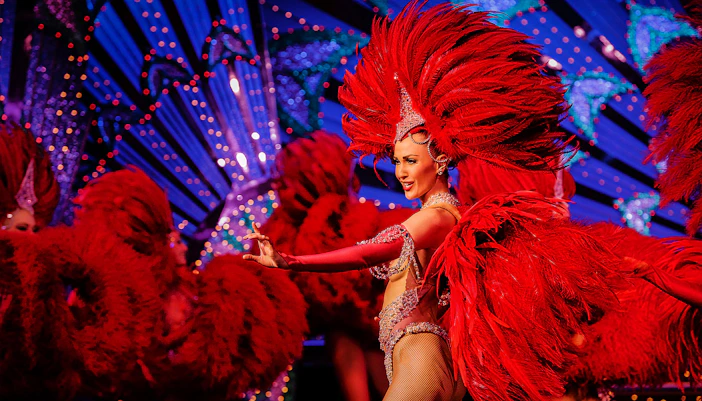
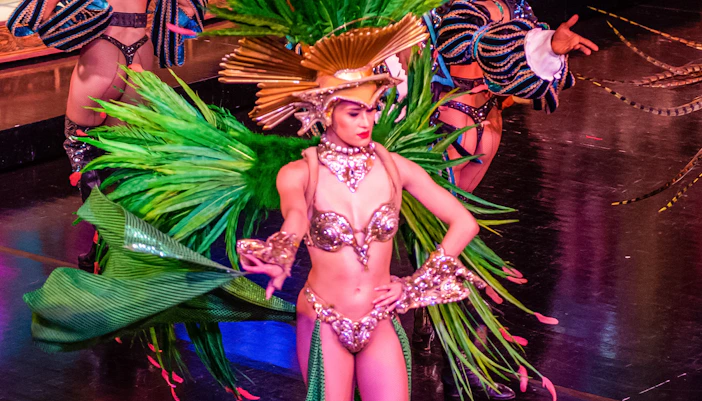
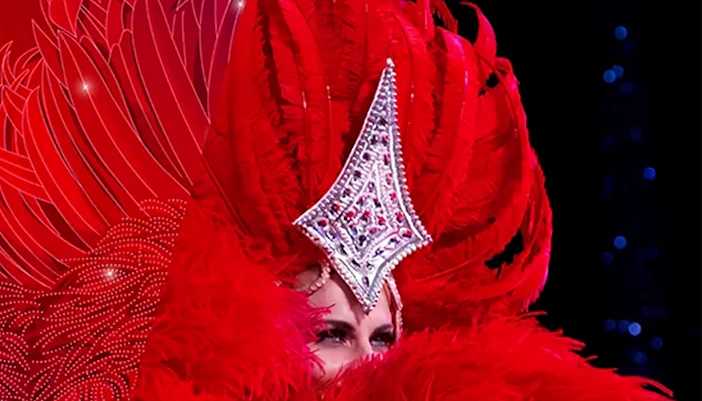
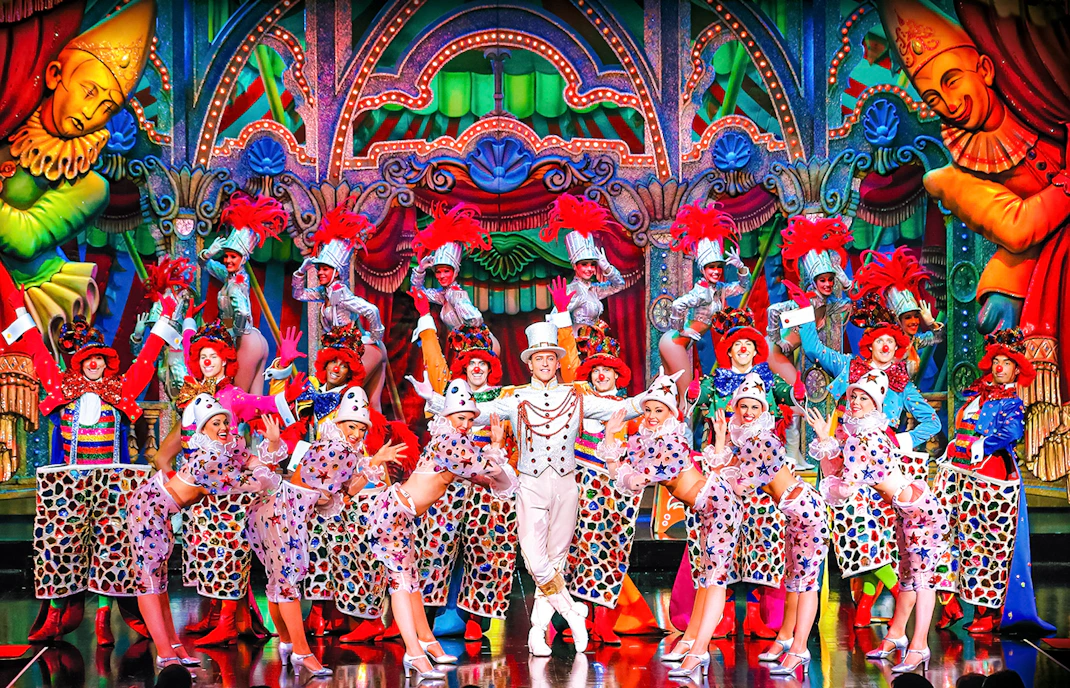
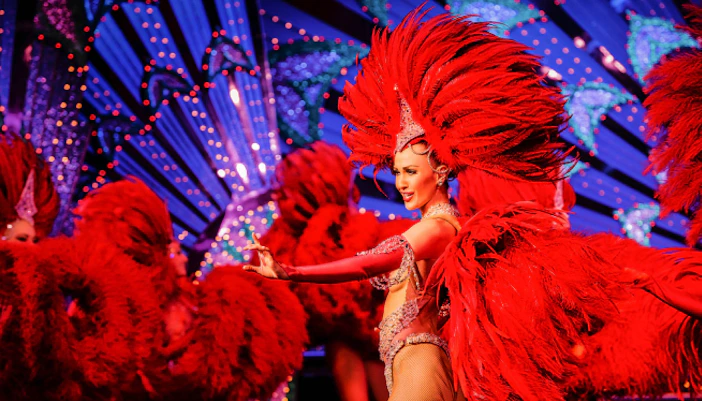
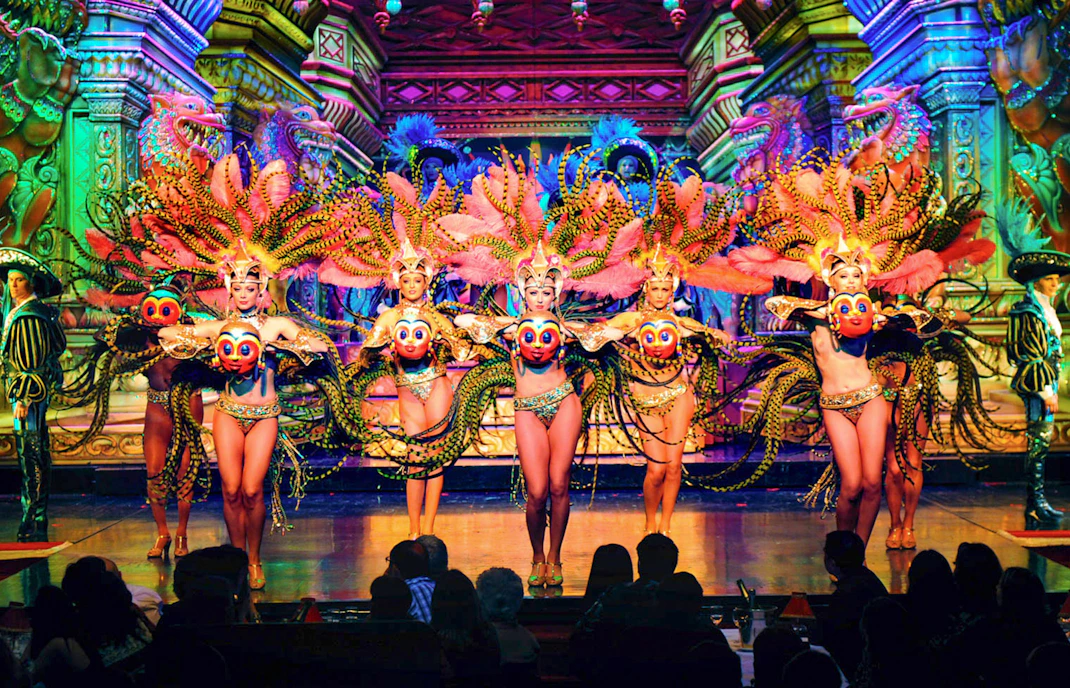
The visual spectacle of the Doriss Girls is just as stunning as the dance itself. Each dancer wears elaborate costumes adorned with feathers, sequins, and rhinestones. The Moulin Rouge boasts over 1,000 unique costumes, and the stage design enhances the performances with rich colors and intricate patterns, making each show a visual masterpiece.
Throughout the years, the Moulin Rouge has teamed up with international superstars, further enhancing its already impressive lineup, including:
While the performances play a huge role in topping the cabaret charts, the Moulin Rouge venue adds to the vibe that nothing else can.

The Moulin Rouge is located in the heart of Paris’s Montmartre district. This area, known for its rich artistic heritage and lively nightlife, provides the perfect backdrop for the iconic cabaret. Positioned at the foot of Montmartre hill, the venue is just a stone’s throw away from the bustling Place Blanche and the famous Pigalle district.
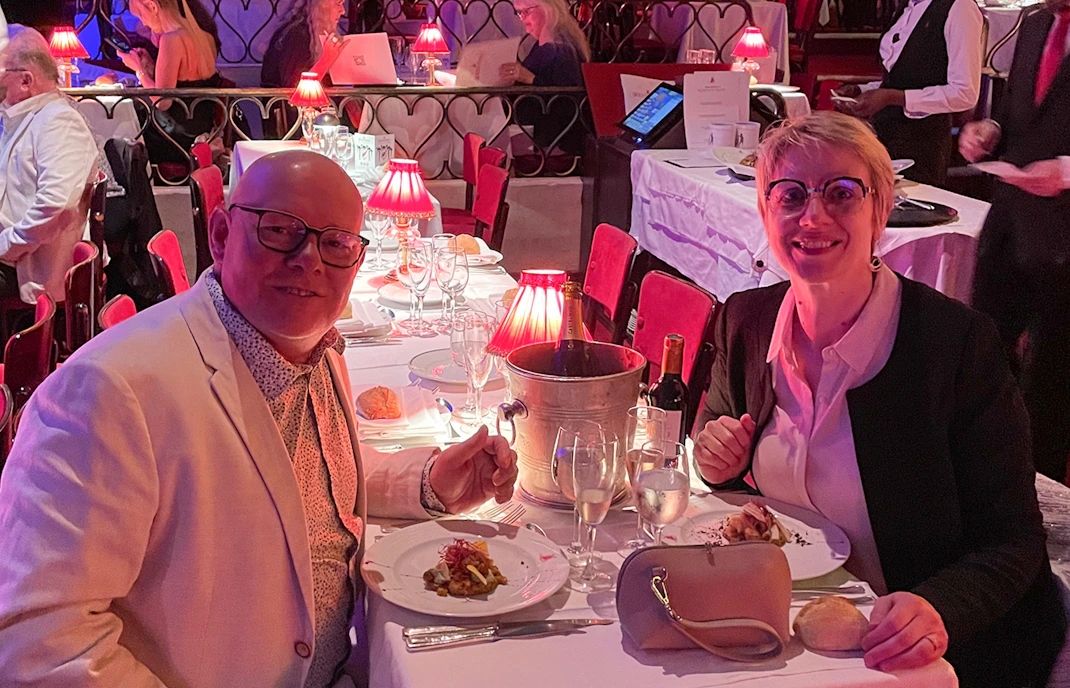
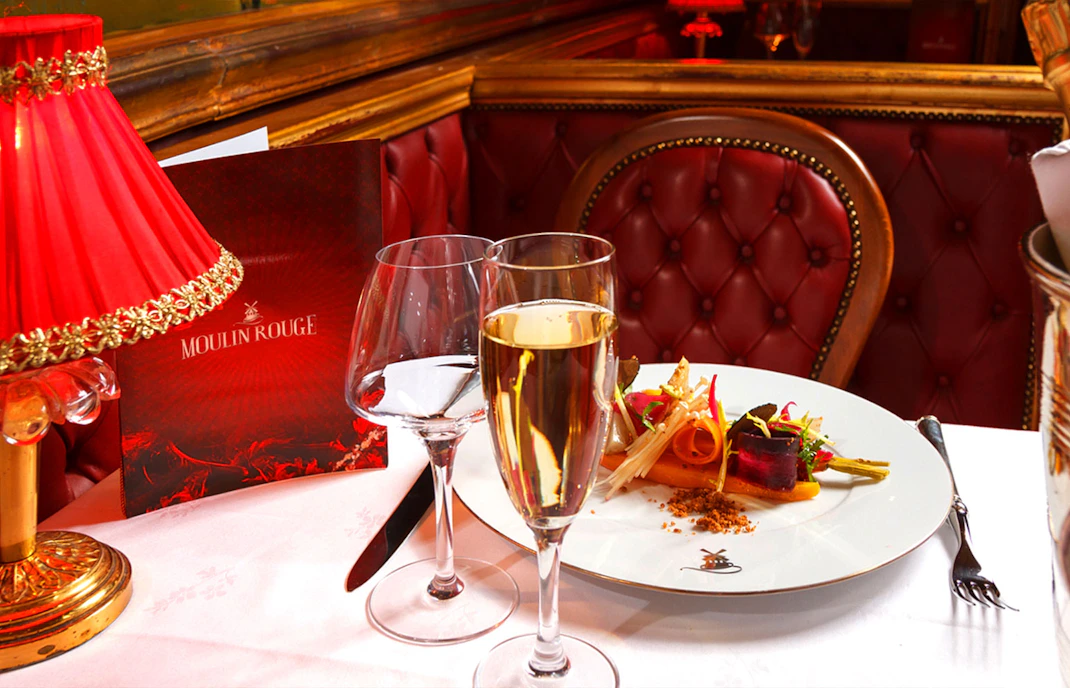
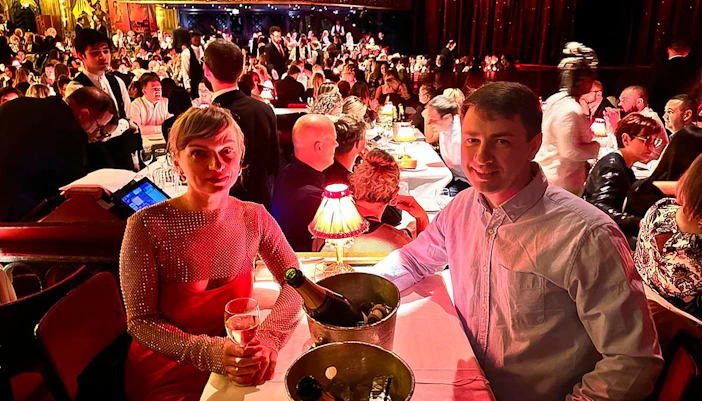
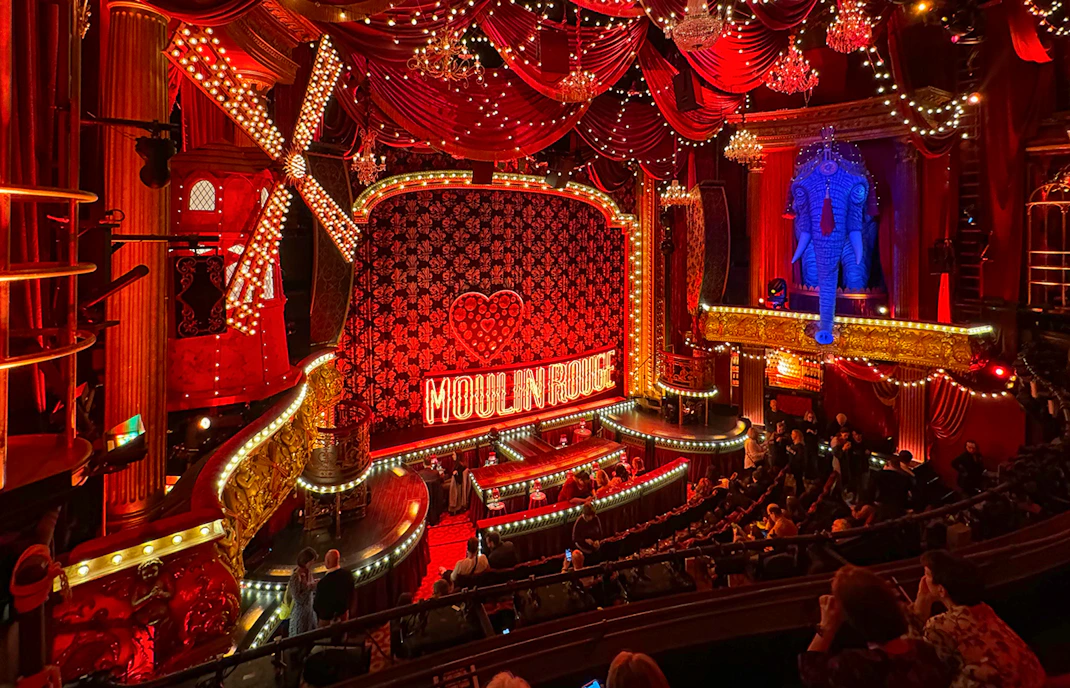
Walking into the Moulin Rouge feels like stepping into another era, where elegance meets theatrical charm. The interior is a visual feast, with deep red velvet furnishings, sparkling chandeliers, and intricate Belle Époque-inspired decor that reflects the grandeur of the late 19th century. The cabaret is designed to provide an intimate experience for every guest, with tables thoughtfully arranged to ensure a great view of the stage.
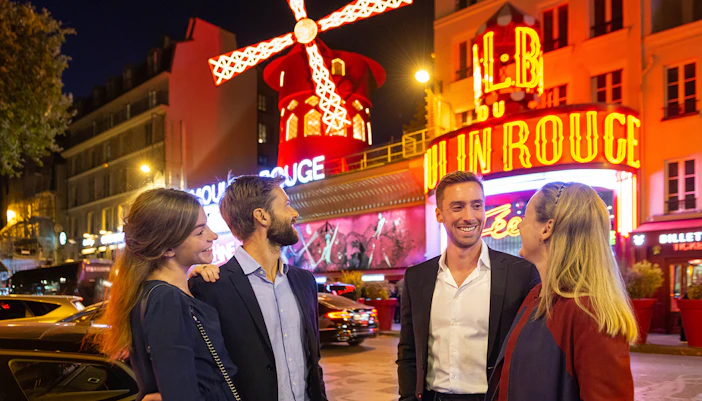
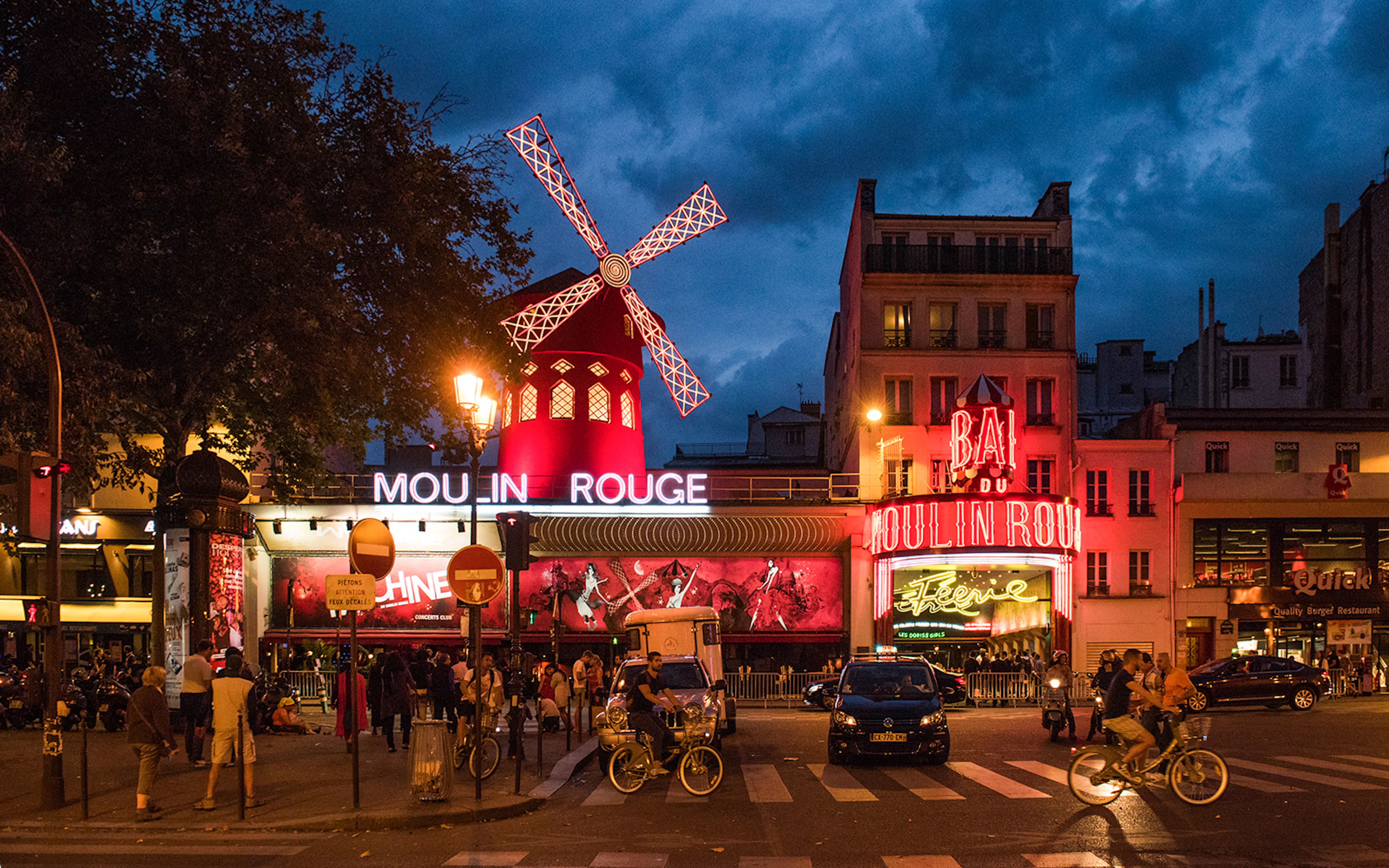
The Moulin Rouge’s most recognizable feature is undoubtedly its iconic red windmill, which sits proudly atop the building. This symbol not only pays homage to the windmills that once dotted the Montmartre landscape but also serves as a visual marker of the cabaret’s long-standing presence in the city.
The Moulin Rouge’s influence extends far beyond the stage, leaving a significant mark on popular culture.

Perhaps one of the most famous adaptations is Baz Luhrmann's 2001 film Moulin Rouge!, which blended the cabaret’s rich history with modern music to create a visually stunning, emotional spectacle. This film not only rekindled interest in the cabaret but also introduced its legendary legacy to new generations, cementing its place in the cultural zeitgeist.

The Moulin Rouge has inspired countless works of literature and songs over the years. Its electric atmosphere and storied history have served as a muse for artists across genres, like Moulin Rouge by Pierre La Mure and Revelle by Lyssa Mia Smith.
While the main attraction is its live performances, you can explore the exterior and iconic red windmill. Inside access is typically reserved for show attendees.
The cabaret honors its history through meticulously choreographed revues, featuring costumes, music, and dance styles reflective of Paris's Belle Époque era.
The cancan began as a rebellious dance in Parisian working-class culture but was elevated to an art form at the Moulin Rouge, becoming a symbol of liberation and joy.
The Moulin Rouge popularized the cancan dance, setting a global standard for cabaret shows. Its mix of glamour, innovation, and tradition has been replicated in venues around the world.
While the shows primarily use music and dance to tell stories, eliminating language barriers, announcements and information are often available in multiple languages for international guests.
Yes, the venue often incorporates elements of opera, ballet, and contemporary music into its shows, creating a multidisciplinary artistic experience.
The red windmill is a symbol of the Moulin Rouge, created to make the cabaret stand out when it opened in 1889. Inspired by traditional French windmills in Montmartre, it became the venue's signature feature. The windmill not only represents the name "Moulin Rouge" (which translates to "Red Mill") but also embodies the artistic and bohemian spirit of the area.
The original Moulin Rouge was destroyed by a fire in 1915. It was rebuilt and reopened in 1925, with a fresh focus on its cabaret traditions. Over the years, it has undergone renovations to maintain its iconic status.
The Moulin Rouge has hosted numerous legendary performers over the years. In its early days, dancers like La Goulue and Jane Avril became icons, and the venue was a favorite haunt of artists like Henri de Toulouse-Lautrec, whose posters helped cement the cabaret’s global fame. Later, stars like Mistinguett, Édith Piaf, and Yves Montand further solidified the Moulin Rouge’s reputation as the heart of Parisian nightlife.
Moulin Rouge Show with Champagne
Moulin Rouge Show with Dinner
La Nouvelle Eve Cabaret Show with Champagne
Moulin Rouge Show & Paris City Tour