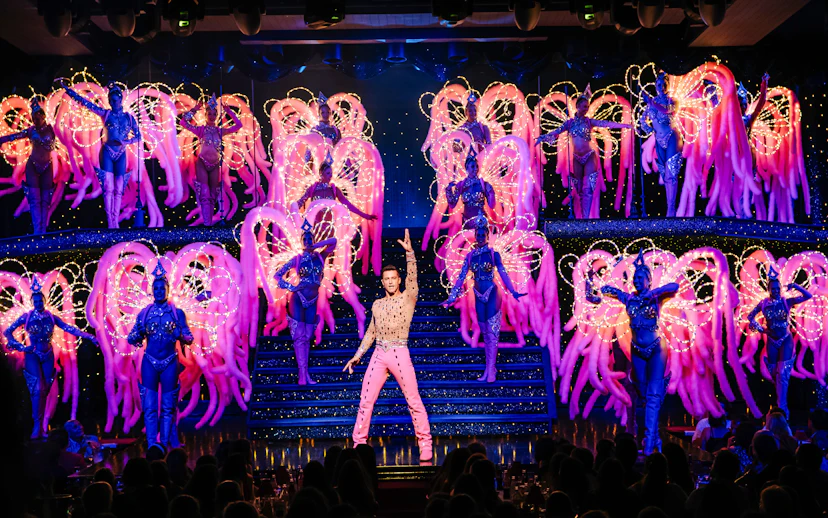
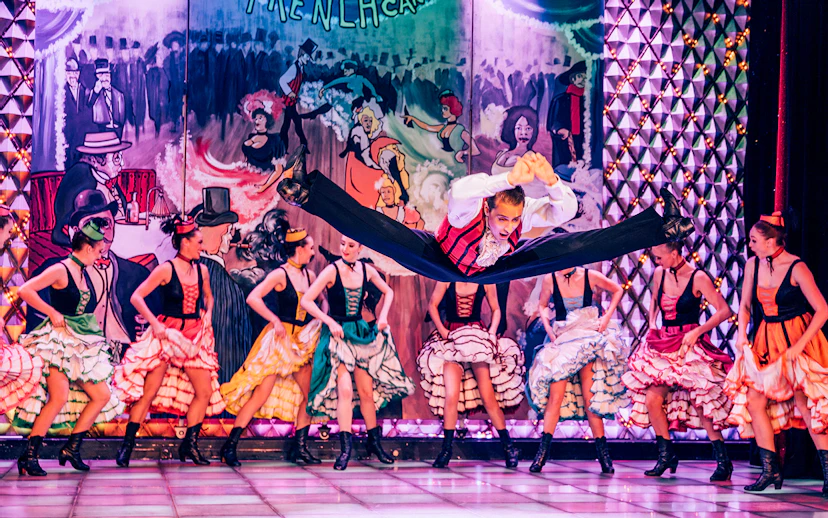
From precision choreography to the famous French Cancan.
Quick Information
RECOMMENDED DURATION
4 hours
Timings
19:00–01:00
VISITORS PER YEAR
600000
TICKETS
From $161.76
EXPECTED WAIT TIME - STANDARD
1-2 hours (Peak), 30-60 mins (Off Peak)
EXPECTED WAIT TIME - SKIP THE LINE
0-30 mins (Peak), 30-60 mins (Off Peak)
Did you know?
The Moulin Rouge was the first building in Paris to shine with electric lights, its colorful facade designed by Adolphe Léon Willette to sparkle across Montmartre.
Every sequin and feather on the costumes is handcrafted by a dedicated on-site atelier, working around the clock to keep the magic alive.
Since 1957, every show starts with the letter “F,” a tradition sparked by Doris Haug’s belief that these names would bring great success— the superstition still holds strong today.
What is Moulin Rouge?
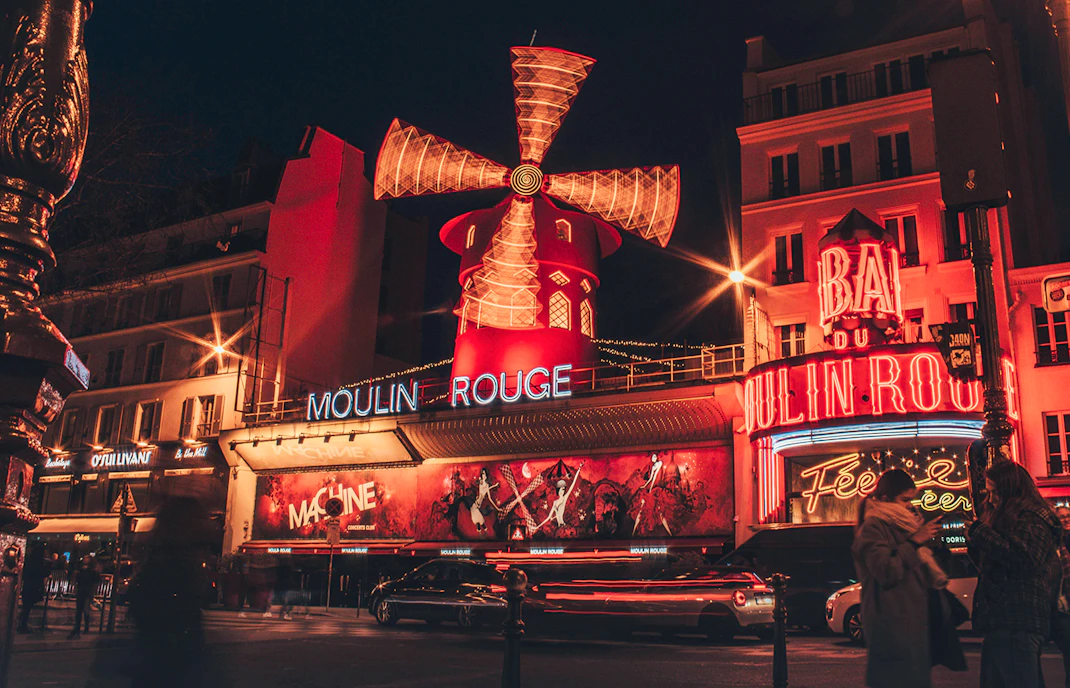
Moulin Rouge is a historic Parisian cabaret in Montmartre, best known for its extravagant revue shows, French Cancan and red windmill façade. Founded in 1889, it became one of the defining stages of Parisian nightlife and continues to combine dance, music, comedy, acrobatics and elaborate theatrical production today.
Its current revue, Féerie, carries that tradition into the present with a large international troupe, elaborate costumes and spectacular sets.
So while the red windmill may be the postcard image, Moulin Rouge is ultimately a live-performance experience: a night of music, movement, glamour and spectacle.
What makes Moulin Rouge iconic?
1/4
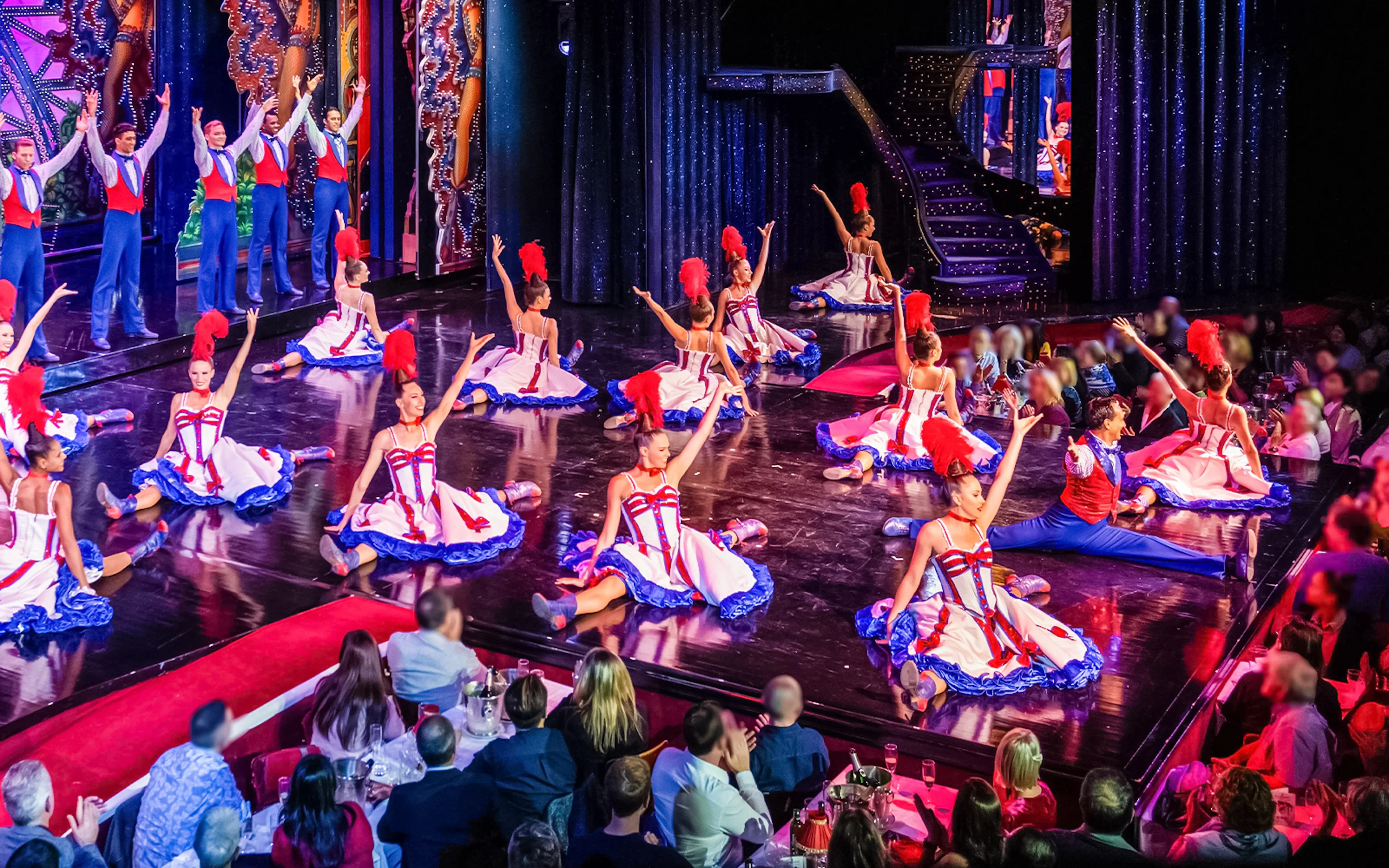
The French Cancan
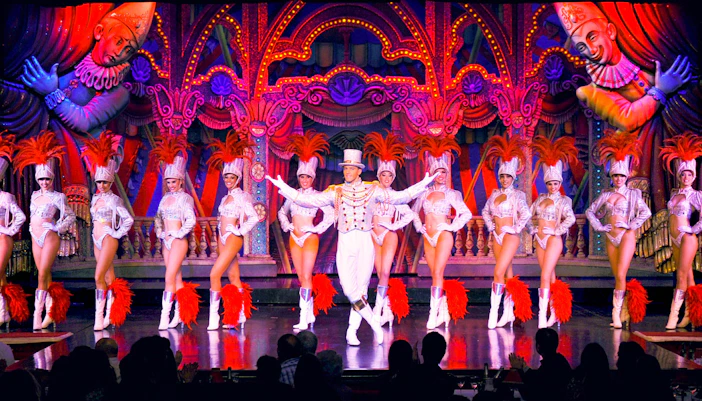
The high-kicking dance that became inseparable from the Moulin Rouge name and one of the enduring symbols of Parisian cabaret.
The spectacle
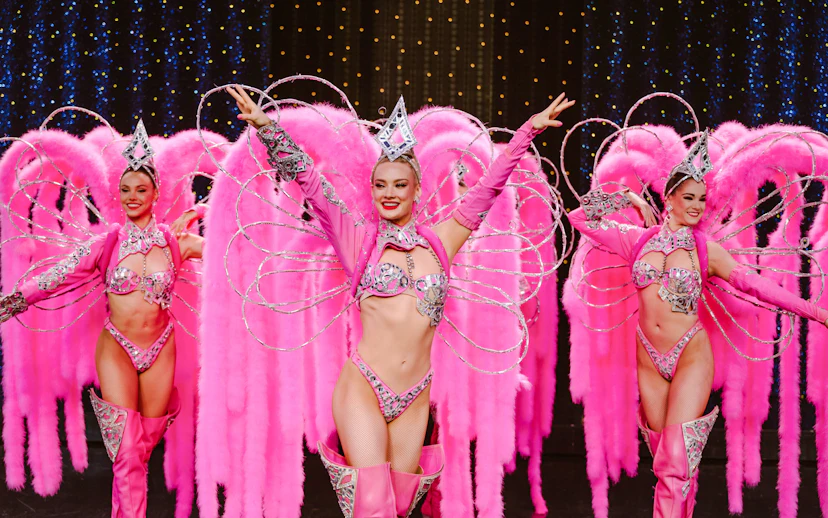
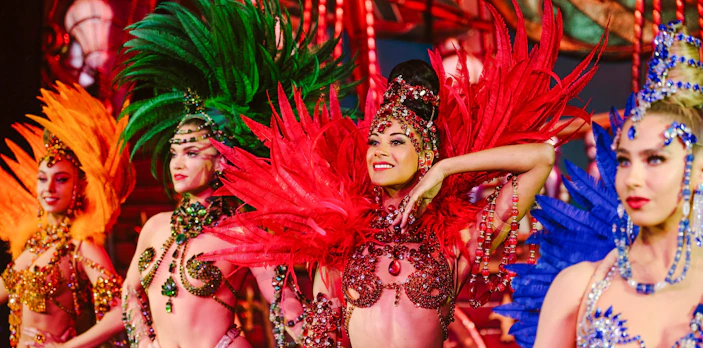
Feathers, rhinestones, sequins, elaborate sets, lighting and choreography turn the stage into a constantly changing visual world.
The performers
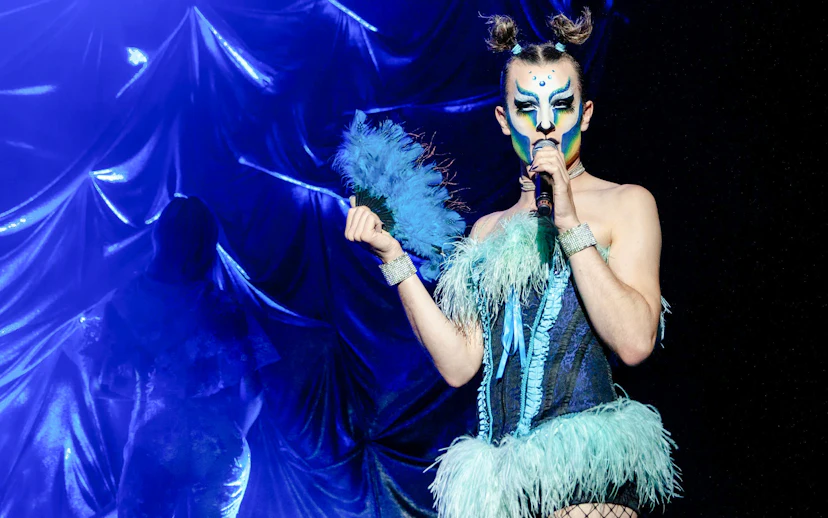
The Moulin Rouge stage brings together an international troupe of dancers and artists trained for the physical demands of large-scale revue performance.
The setting
The red windmill, Montmartre location and theatrical interior make the venue part of the experience, not merely the place where the show happens.
What to expect from a Moulin Rouge show
Moulin Rouge isn't just about the Cancan. The revue brings several forms of live performance together under one roof.
💃Dance
🤸🏼♂️Acrobatic acts
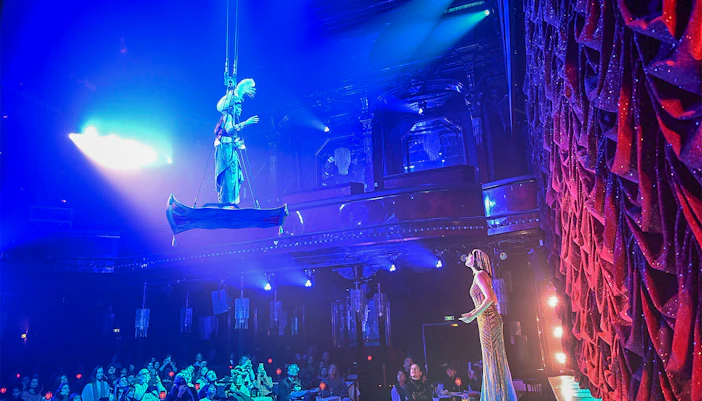
Féerie incorporates a variety of speciality performances alongside its dance numbers.
🎵Music
Music helps carry the revue from one scene to the next, creating the rhythm and atmosphere of the evening.
🎭Costume & sets
The spectacle is as visual as it is performative, with elaborate costumes, theatrical sets and changing scenes.
See the Féerie show →
History of Moulin Rouge Paris
1889: The red windmill rises
Joseph Oller and Charles Zidler open Moulin Rouge in Montmartre, creating a new kind of Parisian entertainment venue.1890s: The Cancan takes centre stage
The venue becomes closely associated with the energetic French Cancan and its daring performers.- 1915–1925: Rebuilding the legend
A fire destroys the original building in 1915. Moulin Rouge eventually returns with a rebuilt venue. - 1960s: Reinventing the revue
Under Jacki Clérico, Moulin Rouge embraces new forms of spectacle and establishes the tradition of giving its revues names beginning with "F". - Today: Féerie
The current revue continues the cabaret's tradition of combining dance, music, costumes and spectacle.
What makes the Moulin Rouge experience unique
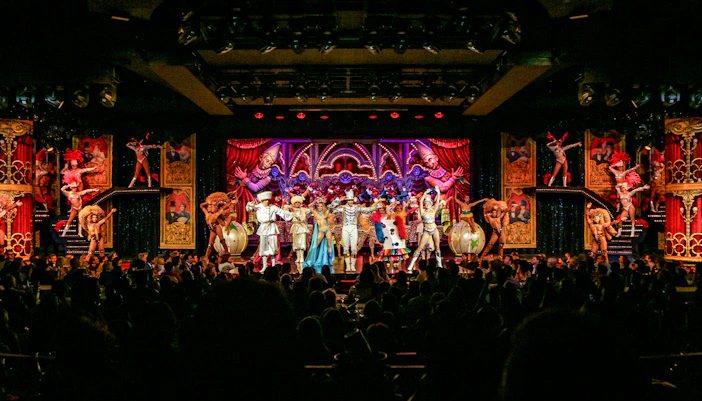
The mood lighting
Lighting at the Moulin Rouge isn’t just there to brighten the stage—it’s a key player in telling the story. The lights shift and change throughout the show, responding to the rhythms of the music and the emotions of the dancers. This creates an ever-changing atmosphere that brings each performance to life, adding depth and drama to the experience.
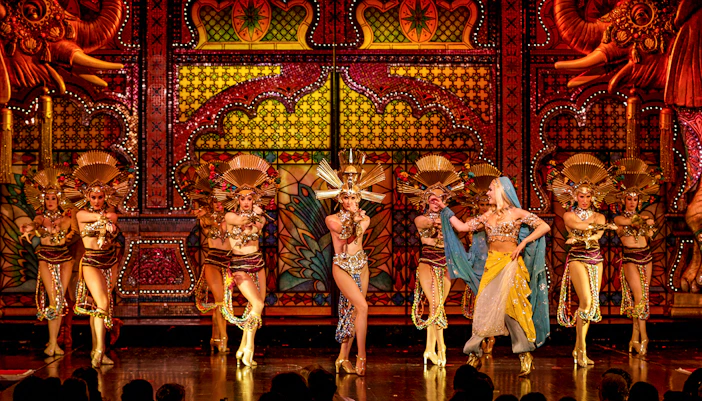
The well-thought choreography
The choreography, too, goes beyond just dancing. Each routine tells a story—sometimes playful, sometimes passionate—but always emotionally engaging. With live music, intricate costume changes, and moves that flow seamlessly together, the performances are a feast for both the eyes and the soul. It’s a blend of theater, dance, and music that invites you to feel every moment.
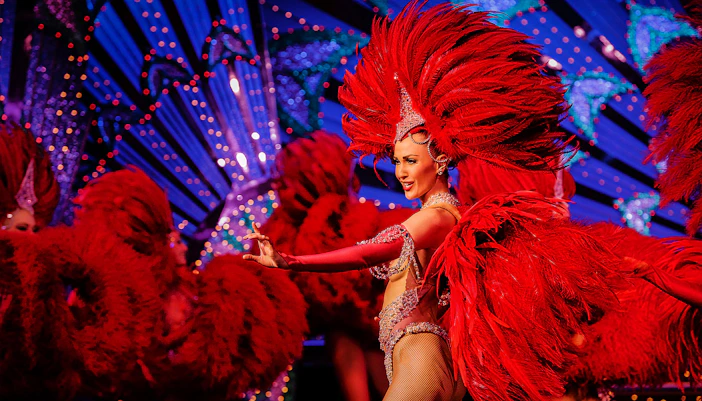
A space for freedom and empowerment
The Moulin Rouge was built on a bold idea: to be a place where women could freely express themselves through dance and performance. In a time when society was rigid and male-dominated, this vision was revolutionary. Today, it stands as a symbol of empowerment, embracing the strength and creativity of women and celebrating their voices on stage.
Despite the challenges the Moulin Rouge has faced over the years, from financial struggles to societal criticism, it has remained true to its roots.
🎭Fun fact: The name Moulin Rouge literally means “Red Mill” in French.
Montmartre was once dotted with windmills, and Moulin Rouge keeps that history alive with its iconic red one. Today, the glowing windmill is instantly recognisable as a symbol of Paris and its legendary nightlife.
The people behind the legend
Moulin Rouge was shaped not just by its red windmill or its stage, but by the founders, performers and artists who turned it into a symbol of Parisian entertainment.
Joseph Oller
The founder who set the spectacle in motion
Joseph Oller co-founded Moulin Rouge with Charles Zidler, opening the cabaret on 6 October 1889. An established entertainment entrepreneur, he brought his flair for spectacle to the new venue.
Charles Zidler
The showman behind the original Moulin Rouge
Charles Zidler co-founded Moulin Rouge and helped shape its early performances and operations. His experience with spectacle helped turn the venue into a carefully orchestrated entertainment experience.
La Goulue
The Queen of the Cancan
Louise Weber, known as La Goulue, was one of Moulin Rouge's earliest and most famous performers. Her energetic style helped make the Cancan synonymous with the cabaret.
Henri de Toulouse-Lautrec
The artist who captured Moulin Rouge
Toulouse-Lautrec was a regular at Moulin Rouge and became closely associated with its early visual identity. His 1891 poster featuring La Goulue and Valentin Le Désossé helped make the cabaret instantly recognisable.
The Moulin Rouge performers: The Doriss Girls
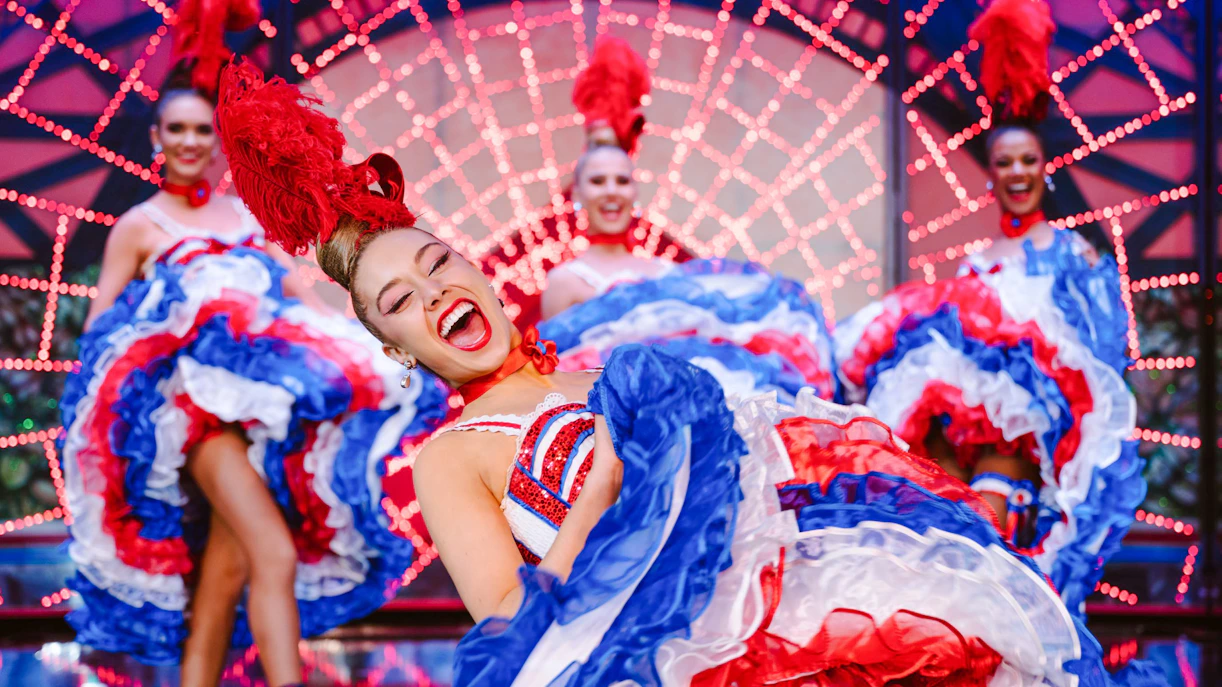
The performers who define Moulin Rouge have changed over the decades, but the French Cancan has remained at the heart of the show. The modern tradition is closely associated with the Doriss Girls, the troupe created by ballet mistress Miss Doris after she joined Moulin Rouge in 1957. What began with four dancers grew into an international troupe, carrying the signature Cancan into the modern revue.
Today, the Doriss Girls remain central to Féerie, performing the famous Cancan as part of the show's four-scene revue.
A stage shaped by artists and performers
Moulin Rouge's history is also a history of collaboration. Over the years, its stage has brought together dancers, singers, actors, musicians, artists and speciality performers.
Mistinguett
One of the great stars of the Moulin Rouge stage, Mistinguett appeared in the revue in the early 20th century and became one of the cabaret's defining performers. Her association with Moulin Rouge included major revues and songs that became part of her legacy.
Edith Piaf
Piaf is among the celebrated artists listed by Moulin Rouge as having performed on its legendary stage, connecting the cabaret's history with the wider story of French popular entertainment.
Jean Gabin & Yves Montand
Both are included among the major performers associated with the Moulin Rouge stage, showing how the venue has historically attracted artists who went on to become major names in French entertainment.
Inside the Moulin Rouge venue
The Moulin Rouge experience starts before the curtain rises. From its unmistakable façade to its Belle Époque-inspired auditorium and spectacular stage, the venue is part of the story.
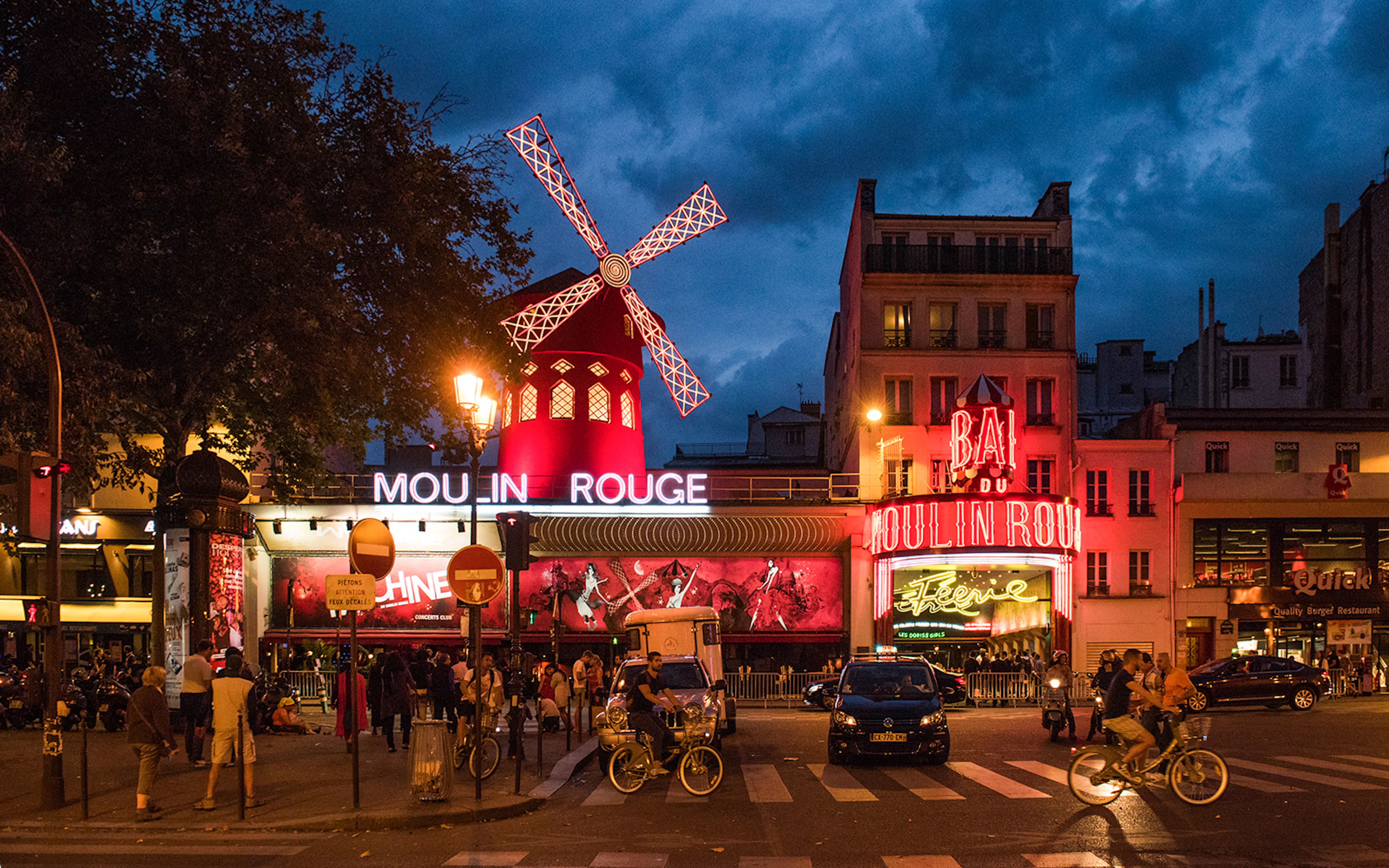
1/6
The iconic red windmill
The red windmill has been the unmistakable symbol of Moulin Rouge since the cabaret opened in Montmartre in 1889. Today, its illuminated façade remains one of the most recognizable sights of Paris after dark.
A Belle Époque-inspired interior
Step inside and the atmosphere changes from Parisian street to theatrical spectacle. The hall combines Belle Époque-inspired décor, murals and distinctive architectural details with the glamour of a modern cabaret.
The cabaret hall
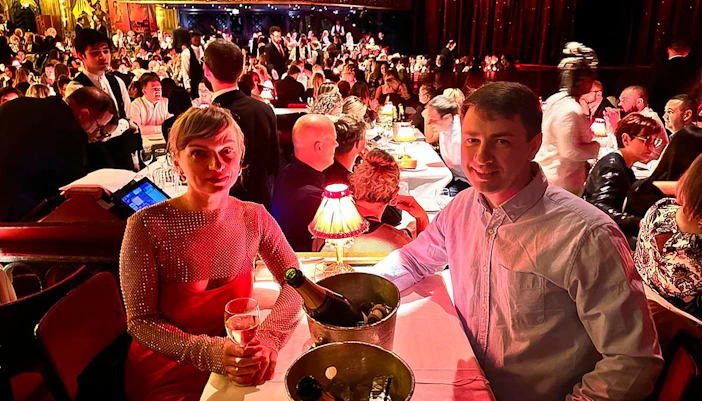
The main hall spans around 1,000 m² and can accommodate up to 850 guests. Hundreds of small red table lamps add to the warm, intimate atmosphere while the audience gathers around the stage.
The stage
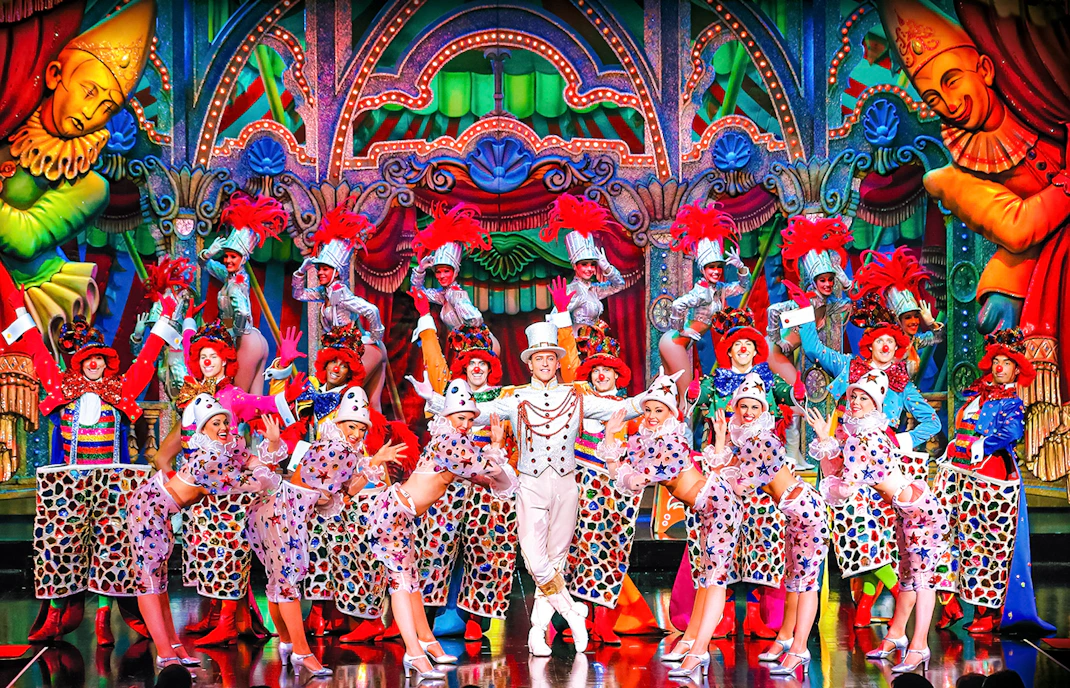
This is where Féerie comes to life across four main scenes, moving from the Gardens of the Moulin to pirate adventures, circus-inspired performances and a celebration of Paris, culminating in the famous French Cancan.
Feathers, sequins & rhinestones
The visual spectacle extends beyond the stage design. More than 1,000 costumes and accessories have been created for Féerie, with each piece designed to withstand the demanding pace of live performance.
The people behind the spectacle
Behind every performance is a team of dancers, dressers, costume designers, artisans, technicians and creatives. Moulin Rouge's current troupe brings together around 60 artists and dancers, supported by the craftsmanship that keeps the revue looking spectacular night after night.
Moulin Rouge's cultural influence
The Moulin Rouge’s influence extends far beyond the stage, leaving a significant mark on popular culture.
In films
Perhaps one of the most famous adaptations is Baz Luhrmann's 2001 film Moulin Rouge!, which blended the cabaret’s rich history with modern music to create a visually stunning, emotional spectacle. This film not only rekindled interest in the cabaret but also introduced its legendary legacy to new generations, cementing its place in the cultural zeitgeist.
In literature
The Moulin Rouge has inspired countless works of literature and songs over the years. Its electric atmosphere and storied history have served as a muse for artists across genres, like Moulin Rouge by Pierre La Mure and Revelle by Lyssa Mia Smith.
Moulin Rouge today
More than a century after its opening, Moulin Rouge remains a working Parisian cabaret, not simply a piece of nightlife history. Its current Féerie revue brings together dance, music, speciality acts, elaborate costumes and theatrical staging for a live audience every evening.
That's the real story of Moulin Rouge: a historic cabaret that has stayed relevant by continuing to perform, reinvent and put on a show.
Frequently asked questions about Moulin Rouge Paris
While the main attraction is its live performances, you can explore the exterior and iconic red windmill. Inside access is typically reserved for show attendees.
The cabaret honors its history through meticulously choreographed revues, featuring costumes, music, and dance styles reflective of Paris's Belle Époque era.
The cancan began as a rebellious dance in Parisian working-class culture but was elevated to an art form at the Moulin Rouge, becoming a symbol of liberation and joy.
The Moulin Rouge popularized the cancan dance, setting a global standard for cabaret shows. Its mix of glamour, innovation, and tradition has been replicated in venues around the world.
While the shows primarily use music and dance to tell stories, eliminating language barriers, announcements and information are often available in multiple languages for international guests.
Yes, the venue often incorporates elements of opera, ballet, and contemporary music into its shows, creating a multidisciplinary artistic experience.
- The original building burned down in 1915 and was rebuilt in 1921.
- It has inspired countless replicas and homages worldwide, from Las Vegas to Tokyo.
- The venue's iconic cancan was initially considered scandalous before it gained cultural acclaim.
The red windmill is a symbol of the Moulin Rouge, created to make the cabaret stand out when it opened in 1889. Inspired by traditional French windmills in Montmartre, it became the venue's signature feature. The windmill not only represents the name "Moulin Rouge" (which translates to "Red Mill") but also embodies the artistic and bohemian spirit of the area.
The original Moulin Rouge was destroyed by a fire in 1915. It was rebuilt and reopened in 1925, with a fresh focus on its cabaret traditions. Over the years, it has undergone renovations to maintain its iconic status.
The Moulin Rouge has hosted numerous legendary performers over the years. In its early days, dancers like La Goulue and Jane Avril became icons, and the venue was a favorite haunt of artists like Henri de Toulouse-Lautrec, whose posters helped cement the cabaret’s global fame. Later, stars like Mistinguett, Édith Piaf, and Yves Montand further solidified the Moulin Rouge’s reputation as the heart of Parisian nightlife.